What is the Fastest Swimming Stroke and How to Learn It?
What is the Fastest Swimming Stroke and How to Learn It?

by Coach Mark
Speed is a key measure of performance in swimming, whether in competitive races, timed training sessions, or personal fitness goals. By moving quickly through the water, swimmers can boost their lap times, enhance endurance, and improve overall technique.
To achieve this, mastering the freestyle stroke, also known as the front crawl, is essential, as it is widely recognized as the fastest swimming stroke.
What Makes Freestyle the Fastest Swimming Stroke?
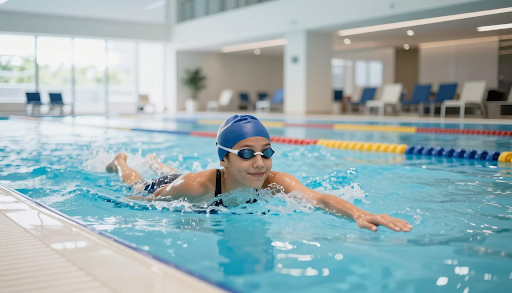
Freestyle swimming stroke allows swimmers to maintain momentum without interruption, enabling the fastest movement through the water.
- Continuous Forward Drive: Alternating arm strokes ensure that at least one arm is always pulling water, creating a constant forward drive. When paired with a leg-flutter kick, this helps maintain momentum and maximize speed.
- Streamlined Body Position: Maintaining a horizontal, streamlined body position reduces water resistance. Unlike strokes with more vertical motion, freestyle allows swimmers to glide smoothly, using less energy to cut through the water.
- Torso Rotation: Rotating the torso from side to side extends arm reach and engages stronger muscles in the back and core, generating more power with each stroke and supporting a fluid, efficient motion.
The Technique Behind Freestyle Swimming Stroke
The fastest speed achieved in the freestyle swimming stroke is driven by strength and precise technique.
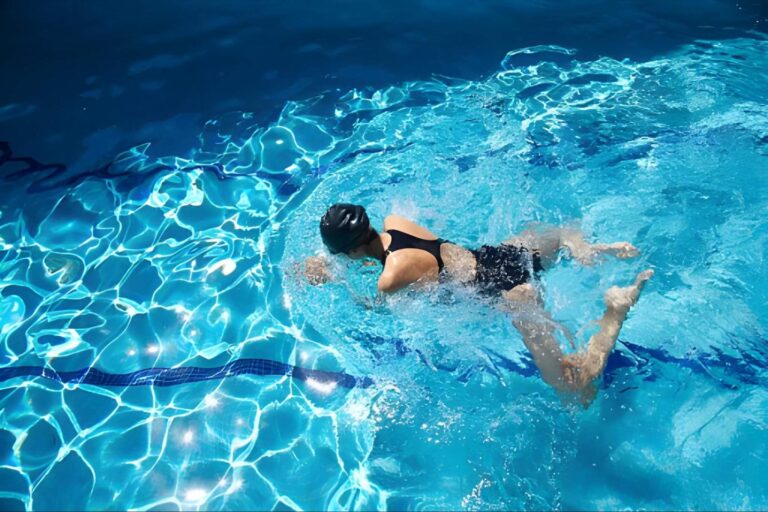
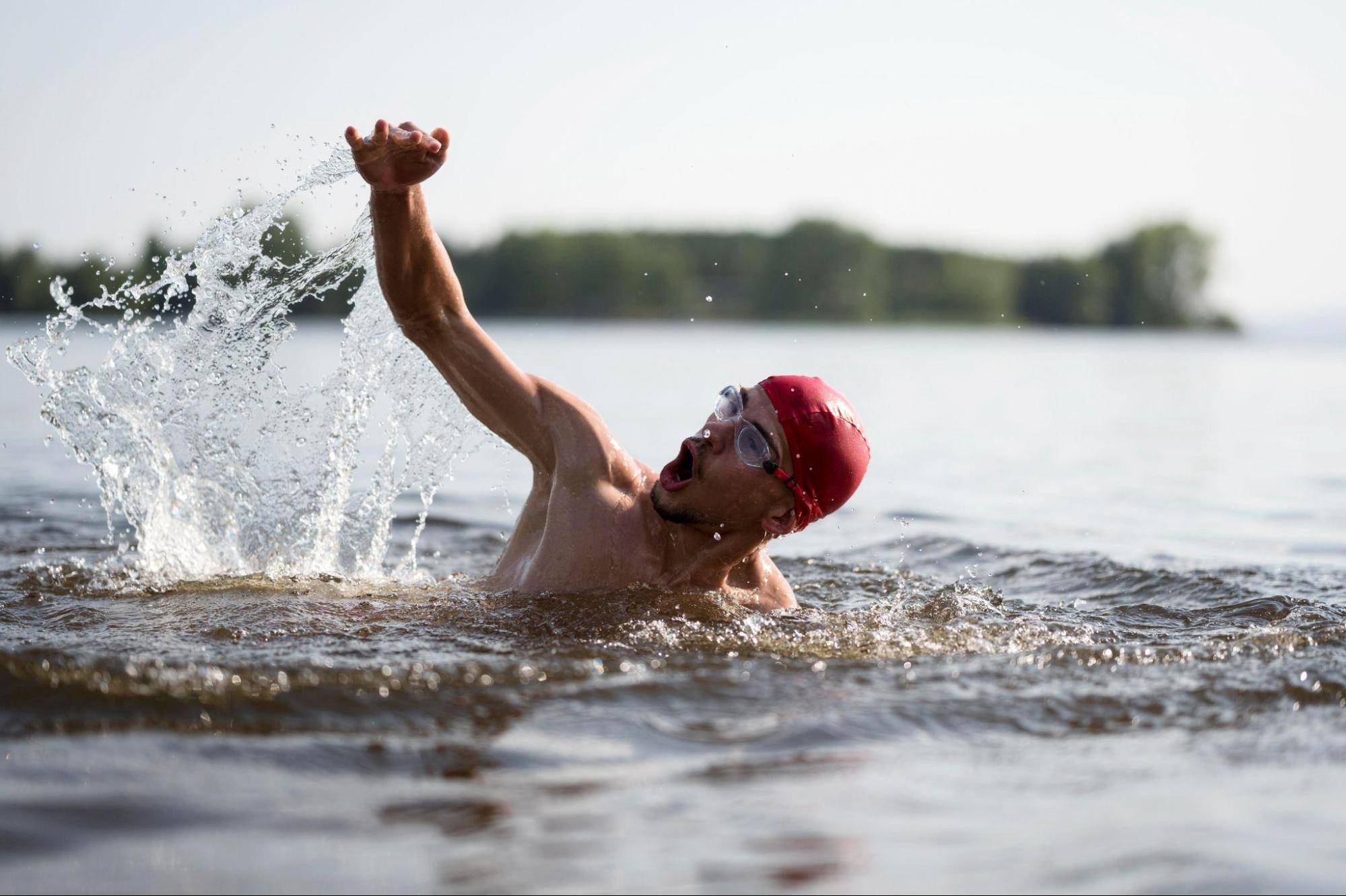
- Arm Pulls: Extend arms fully forward, then pull the water back in a continuous motion. Controlled, circular strokes generate maximum propulsion without creating unnecessary splash, ensuring steady forward movement.
- Hip-Driven Flutter Kick: Kick from the hips with quick, consistent movements, keeping legs straight but flexible. When coordinated with arm strokes, this technique adds balance and forward drive without wasting energy.
- Side Breathing for Rhythm: Turn the head to the side to breathe while keeping the body aligned. This method maintains the stroke’s rhythm and prevents drag from disrupting speed.
- Horizontal Body Alignment: Keep head, spine, and hips in a flat, streamlined position near the water’s surface to reduce resistance and maintain smooth momentum throughout each stroke.
How to Boost Speed in the Freestyle Swimming Stroke?
Once the freestyle technique is well established, the next step is to introduce structured speed work.
- Start with a Proper Warm-Up: Begin each session with easy freestyle, kicking, and technique drills to prepare muscles for high-intensity swimming and reduce the risk of injury.
- Add Short Sprint Sets: Include 25 m or 50 m all-out sprints with sufficient rest to develop explosive speed and anaerobic strength.
- Train Speed Endurance: Practice descending sets, where each repeat is faster than the last, to maintain speed over longer distances.
- Use Speed-Focused Drills: High-elbow catch drills, kickboard sprints, and fin work help reinforce fast, efficient movement.
- Refine Starts and Turns: Strong push-offs and quick transitions help preserve speed throughout each lap.
Why Freestyle Stays the Fastest Among Other Swimming Strokes?
Other popular types of swimming strokes lag behind freestyle because of variations in propulsion, body alignment, and water resistance.
- Butterfly Stroke: Known as the second-fastest stroke after freestyle, the butterfly stroke delivers strong propulsion through simultaneous arm pulls and a dolphin kick. However, its high energy demands and the stop-and-go motion caused by both arms exiting the water simultaneously create significant drag, reducing overall speed.
- Backstroke: Swimming on the back increases water resistance, making it harder to maintain a streamlined position. While it uses similar arm movements to freestyle, the body orientation naturally generates more drag, limiting velocity.
- Breaststroke: With broad arm sweeps and frog-like kicks, breaststroke produces considerable resistance. The pause between strokes interrupts momentum, making it the slowest competitive stroke despite its suitability for beginners.
Why Does Freestyle Dominate Competitive Swimming?
Freestyle has a clear competitive edge, making it the preferred stroke for events ranging from 50 m sprints to 1500-metre races. Its continuous propulsion and streamlined technique allow swimmers to maintain high speeds, which is why it is often chosen as the final leg in medley races.
This dominance is often reflected in competitive records. For example, at the 2025 SEA Games in Thailand, Singapore’s men’s 4×100 m freestyle relay team, Jonathan Tan Eu Jin, Zulhilmi Bin Mohamed Azman Ardi, Mikkel Jun Jie Lee, and Glen Lim Jun Wei, stormed to gold with a new Games record of 3:16.65. They broke the previous six-year record and finished more than 3 seconds ahead of silver medallists Vietnam.
Master the Fastest Swimming Stroke with Marsden Swim School
Being the fastest swimming stroke, freestyle can help swimmers gain a competitive edge and improve performance, but achieving and sustaining its speed requires more than practice alone.
This is where professional instruction makes a difference.
At Marsden Swim School, we offer structured swimming classes for kids and adults, led by experienced, certified coaches who focus on technique, confidence, and performance at every level. Whether you are looking to help your child improve basic swimming skills or aiming to improve your speed and efficiency in the water, our tailored programs provide the proper support.
Enrol in our swimming classes in Singapore today and take the next step towards faster, more confident swimming for yourself or your child.