Do Baby Swimming Lessons Actually Help Development? Benefits Backed by Research
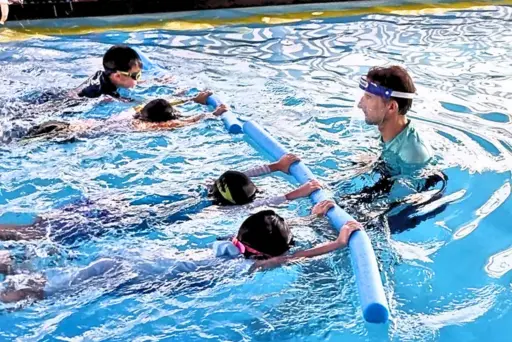
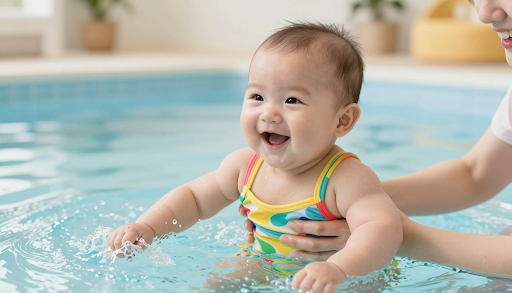
Packing up nappies and towels for a morning at the pool is a familiar weekly routine for many families in Singapore. While parents naturally look for ways to support early childhood milestones, understanding the genuine benefits of baby swimming lessons helps cut through the noise online. Rather than focusing on complex developmental scales, the most vital aspect of early years swimming is building a foundation of safety and water confidence.
At Marsden Swim School, we have spent over 25 years teaching children to swim in Singapore. Our structured baby and toddler programmes welcome little ones from four months of age. We do not enrol younger newborns under four months, as this is the ideal stage for babies to begin adapting to the pool environment comfortably
Learn more about our Newborn & Infant Swim Class
Key Takeaways
- Proven Physical Milestones: Peer-reviewed research shows that consistent, early years water play directly accelerates crucial gross and fine motor skills.
- Warm, Safe Environment: To protect young immune systems and keep babies completely comfortable, all under-four classes run exclusively in our salt-chlorinated pools heated to a cosy 33°C.
- Highly Personalised Learning: Class sizes are kept to a maximum of four swimmers, ensuring every baby gets close attention and gentle, individual guidance.
- Clear, Competency-Based Progress: Children advance naturally at their own pace through our parent-accompanied levels before transitioning to independent classes at age four.
Developing Water Confidence From Four Months
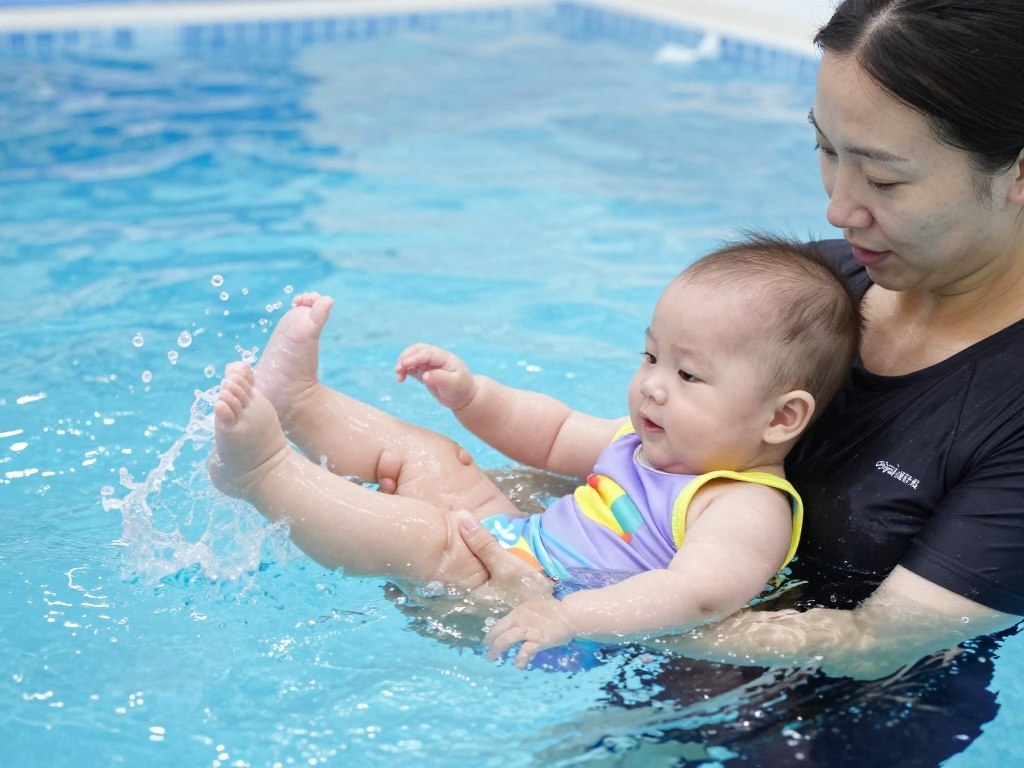
Early exposure to the water is primarily about helping infants feel secure and relaxed in an aquatic environment. When looking at baby swimming development, the key is structured, playful progression in a setting designed specifically for young learners.
To make this experience as comfortable as possible, our classes for children under four years old run exclusively at our two indoor, heated pools at Bukit Timah and Potong Pasir. These pools are salt-chlorinated and kept at a cosy 33°C to ensure babies stay warm throughout their session. Each class is kept small with a maximum of four swimmers, allowing our instructors to focus closely on each child’s individual readiness.
How Structured Swim Sessions Boost Motor Skills
Moving in water places unique, gentle demands on a baby’s growing body. Because water reduces the effects of gravity, infants can explore movements in the pool that they are not yet physically able to perform on solid ground.
A 2022 pilot study led by researcher Irene Leo and colleagues from the University of Padua explored this relationship by assessing infants aged 6 to 10 months who participated in regular, structured water activities once a week. Using the internationally recognised Peabody Developmental Motor Scale, the researchers compared babies who swam regularly against those who did not.
The results showed that the swimming group demonstrated significantly higher scores in several key physical areas:
- Reflexes: Showing faster and more coordinated responses.
- Grasping: Demonstrating improved fine motor control and eye-and-hand coordination.
- Total Motor Quotient: Showing a higher overall level of physical coordination and balance.
When a baby glides through the water, reaches for colourful floats, or holds onto the pool wall, they are doing much more than just playing. They are building critical muscle tone, spatial awareness, and fine motor skills that directly support milestones on land like crawling, sitting independently, and eventually standing.
View Our Pool Facilities and Learn More About Our Swimming Class for Kids
Frequently asked questions
At Marsden Swim School, babies can start their swimming journey in our Starfish class from four months of age. We do not offer lessons for newborns under four months, as this allows babies time to develop their immune systems and head control before entering the pool.
Yes. All of our classes for babies and toddlers under four years old are held in our specialised indoor, salt-chlorinated pools heated to 33°C at Bukit Timah and Potong Pasir. Please note that we do not run infant classes at our GESS or Delta Swimming Complex locations.
We maintain a maximum of four swimmers per class to ensure a safe, calm, and highly personalised environment for your child.
We do not offer free trials for our regular classes. However, you can book a paid trial class at the price of a single lesson, and we currently waive one lesson’s fee upon enrolment.
While lessons significantly help, they are just one layer of defence. You must always combine formal lessons with active, constant supervision and physical barriers to prevent unsupervised access to water.
Read: What Do Kids Actually Learn in Swimming Classes? Skills, Safety & Confidence Explained
How Our Structured Progression Works 
Children learn best when the teaching matches their developmental stage. We guide families through a clear, skill-based progression that prioritises safety alongside water confidence:
- Starfish (4 to 15 months): A parent-accompanied class focused on gentle water acclimation, basic submersions, and building comfort.
- Seahorse (15 months to 3 years): A parent-accompanied class that introduces independent movement and basic water safety skills.
- Stingray (2.5 to 3.5 years) & Turtle (3 to 4 years): Parent-accompanied classes that refine breath control, floating, and early propulsion.
- Independent Classes (From 4 years): Children transition to swimming independently in our Otter (for new starters) or Seal classes once they reach four years of age, matching their physical and emotional maturity.
Why families trust Marsden Swim School
Choosing a swim school is about finding a safe, supportive environment where your child can develop a lifelong love for the water. We have built our programme around the unique needs of young learners:
- Over 25 years of experience: We have been teaching children to swim in Singapore for more than a quarter of a century, providing families with a deeply trusted, time-tested approach to water education.
- Warm, salt-chlorinated indoor pools: To keep young immune systems safe and babies completely comfortable, all of our under-four classes are held exclusively in our indoor pools at Bukit Timah and Potong Pasir, heated to a cosy 33°C.
- Intimate class sizes: We maintain a maximum of just four swimmers per class, ensuring your baby gets the highly personalised attention and gentle guidance they need to build confidence.
- A skill-based progression: Our curriculum features 11 competency-based levels and 66 individual skills, meaning children are never rushed and only progress when they are physically and emotionally ready.
Read: How Long Does It Take for a Child to Learn Swimming? A Realistic Timeline for Parents
Learn More About Our Progression Levels
Join Us at Marsden Swim School
Give your child a safe, supportive introduction to the water. Book a paid trial class at our Bukit Timah pool, located just a five-minute walk from Beauty World MRT (DT5), or our Potong Pasir location.
📱Phone: 6015 0637
📍 Main Address: 102 Jalan Jurong Kechil, Singapore 598602
🕐 Operating Hours: Monday to Friday (9am to 6pm), Saturday and Sunday (8am to 6pm)
🌐 Website: https://marsdenswimschool.com