

8 Tips to Improve Your Freestyle Swimming Technique
by Coach Mark
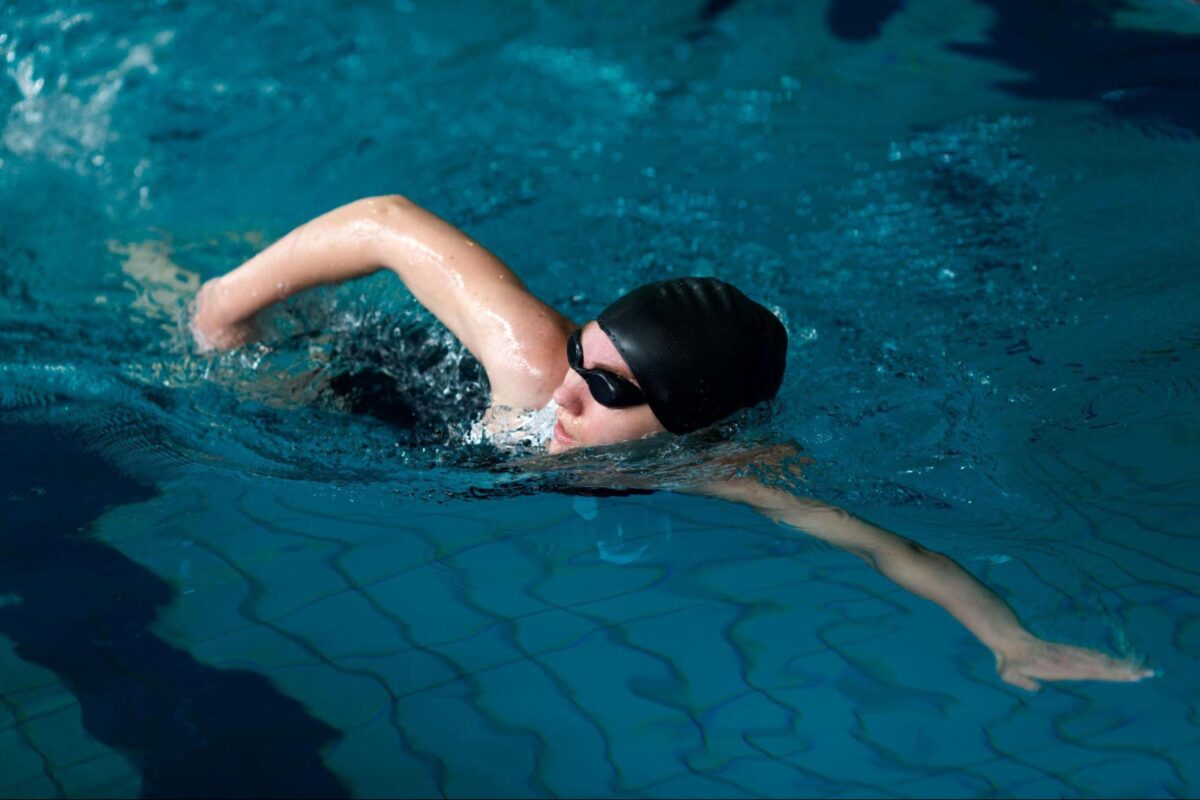
Freestyle swimming is defined by its alternating arm strokes and flutter kick, combined with smooth, rhythmic breathing. However, it can be frustrating when you feel like you are splashing in place, struggling for air, or fighting the feeling of your legs sinking.
The key is not to swim harder but to master the right technique. Focusing on body alignment, strong strokes, efficient kicks, proper breathing, and body rotation can help you master freestyle swimming, the fastest swimming stroke.
1. Maintain a Neutral Head and Body Position
Getting your head and body alignment right is the basis of a freestyle swimming stroke.
- Keep Your Head Aligned: Start by keeping your head still and looking down toward the bottom of the pool. The waterline should sit around the middle or top of your head, keeping your spine neutral and preventing neck strain.
- Maintain a Horizontal Body Position: Then, focus on maintaining a horizontal body position. Slightly press your chest down to lift your hips and legs closer to the surface, keeping drag to a minimum.
- Use Your Core for Stability: Engage your core to stabilize your movement. Tighten your abdominal and lower back muscles to reduce unnecessary movement.
2. Position your Hand Correctly
Once your body is level, how you place your hand and extend your reach in freestyle swimming can impact your performance.
- Enter Fingers First: Put your hand into the water with your fingers going in first, not your palm. This ensures a clean entry with minimal splash.
- Extend Your Reach Forward: Reach forward slightly before starting the pull to cover more distance with each stroke.
- Maintain Proper Arm Alignment and Elbow Position: Keep your arm straight in line with your body and avoid crossing over the center to stay balanced and swim straight. As your hand moves underwater, bend your elbow slightly so your forearm pushes more water, giving you better propulsion.
3. Master the High-Elbow Catch
After your hand enters the water, the way you start the pull can greatly affect how much power you generate. A high-elbow catch helps you move forward in freestyle swimming by using more of your arm to push against the water.
- Set Your Elbow High Early: Bend your elbow early so your forearm points toward the bottom of the pool, keeping the elbow higher than the hand. This position helps you “grip” the water instead of letting it slip past.
- Push Water Back with Your Forearm: Use your forearm and hand to push water backward, as this creates a larger surface area for stronger movement.
- Finish the Stroke Past Your Hip: Pull your arm under your body, then push the water past your hip for a better drive.
- Avoid Dropping the Elbow: Avoid letting your elbow drop or pulling your arm too wide, as this reduces control and weakens your forward motion.
4. Improve Your Underwater Pull and Push
Once you have learned how to “grip” the water with a high-elbow catch, the next step is to focus on how you move your arm through the rest of the freestyle swimming stroke.
- Keep the Pull Close to Your Body: Pull your arm back close to your body after the catch, keeping the movement controlled. This helps you stay streamlined and reduces wasted effort.
- Push Strongly Past the Hip: Push the water firmly past your hip at the end of each stroke to gain extra momentum before the arm exits the water.
- Use Your Forearm for More Power: Use your forearm along with your hand to move more water, as this creates greater force than relying on the hand alone.
- Maintain a Alternating Rhythm: Keep both arms working in a continuous, alternating rhythm, so your stroke stays stable and fluid from one side to the other.
5. Relax Your Arm During Recovery
After finishing the push phase near your hip, how you bring your arm back to the front plays a key role in saving energy and maintaining flow.
- Relax the Arm on Exit: Let your arm relax as it exits the water, keeping the elbow slightly bent and lifted as the hand moves forward. This keeps the motion easy on the shoulders.
- Recover Above the Water: Guide the arm forward above the water rather than dragging it through the water, so your body stays stable and aligned.
- Keep the Movement Close to Your Body: Rather than swinging the arm wide, keep it close to your body line, as large circular paths can slow you down and disrupt your rhythm.
- Coordinate Both Arms: Match the recovery of one arm with the other arm’s underwater movement to maintain consistent timing throughout each lap.
6. Kick From the Hips With Small and Fast Movements
While your arms create most of the drive, your kick plays aan essentialrole in keeping your body balanced and helping you move forward.
- Initiate the Kick from the Hips: Start the kicking motion from your hips rather than bending your knees too much. Your legs should stay fairly straight, with a gentle, whip-like movement coming from the upper thighs.
- Keep the Kicks Short and Fast: Smaller movements reduce resistance and help you maintain a steady pace.
- Point Your Toes with Relaxed Ankles: This will help your feet stay streamlined and push water more cleanly.
7. Work on Your Breathing Technique
How you breathe in freestyle swimming affects both your endurance and your stroke timing. Poor breathing technique can leave you feeling tired quickly, while proper breath control during swimming helps you stay calm in the water.
- Exhale Fully Underwater: Breathe out slowly while your face is in the water so your lungs are ready for a quick inhale when you turn to the side. Holding your breath can make swimming feel harder than it needs to be.
- Turn Your Head: Turn your head slightly to the side when you need air, keeping one eye in the water and one out. Avoid lifting your head forward, as this can cause your lower body to drop.
- Practice Bilateral Breathing: Take a breath on both sides by taking one breath every three strokes. This helps keep your movement balanced and prevents one-sided strain.
- Use Side-Breathing Drills: Practice side-breathing drills to improve timing and build confidence with your breathing pattern.
8. Use Body Rotation
Body rotation plays a vital role in connecting all aspects of the freestyle swimming stroke. When your hips and shoulders move together while swimming, your reach becomes longer, breathing feels more natural, and your body cuts through the water with less resistance.
- Rotate Hips and Shoulders Together: Rotate your shoulders and hips along your body’s length as each arm moves forward. This helps you extend further without straining your arms.
- Support Your Breathing Through Rotation: Let the rotation guide your breathing by turning your head to the side as your body rolls, rather than forcing the movement.
- Avoid Staying Flat in the Water: This puts extra pressure on the shoulders and increases resistance.
Elevate Your Freestyle Swimming with Marsden Swim School
If you are ready to improve your freestyle swimming technique further, professional guidance from experts at Marsden Swim School can help.
Our experienced coaches, all of whom hold AUSTSWIM certification, ensure that each part of your stroke is corrected and developed, helping you swim with better control and confidence. With small, personalized swimming classes for kids and adults, every swimmer receives focused attention and support based on their individual needs.
Join our swimming classes in Singapore today and enhance your freestyle swimming skills.