

A Complete Guide to Different Types of Swimming Strokes
by Coach Mark
Some people learn to swim simply to enjoy the water, while others aim to master precise techniques for fitness or performance, making it essential to learn about various swimming strokes.
From freestyle to backstroke, breaststroke, butterfly, and beyond, there are 6 main types of swimming strokes, each designed to build specific skills, improve efficiency, and enhance overall confidence in the water.
1. Freestyle
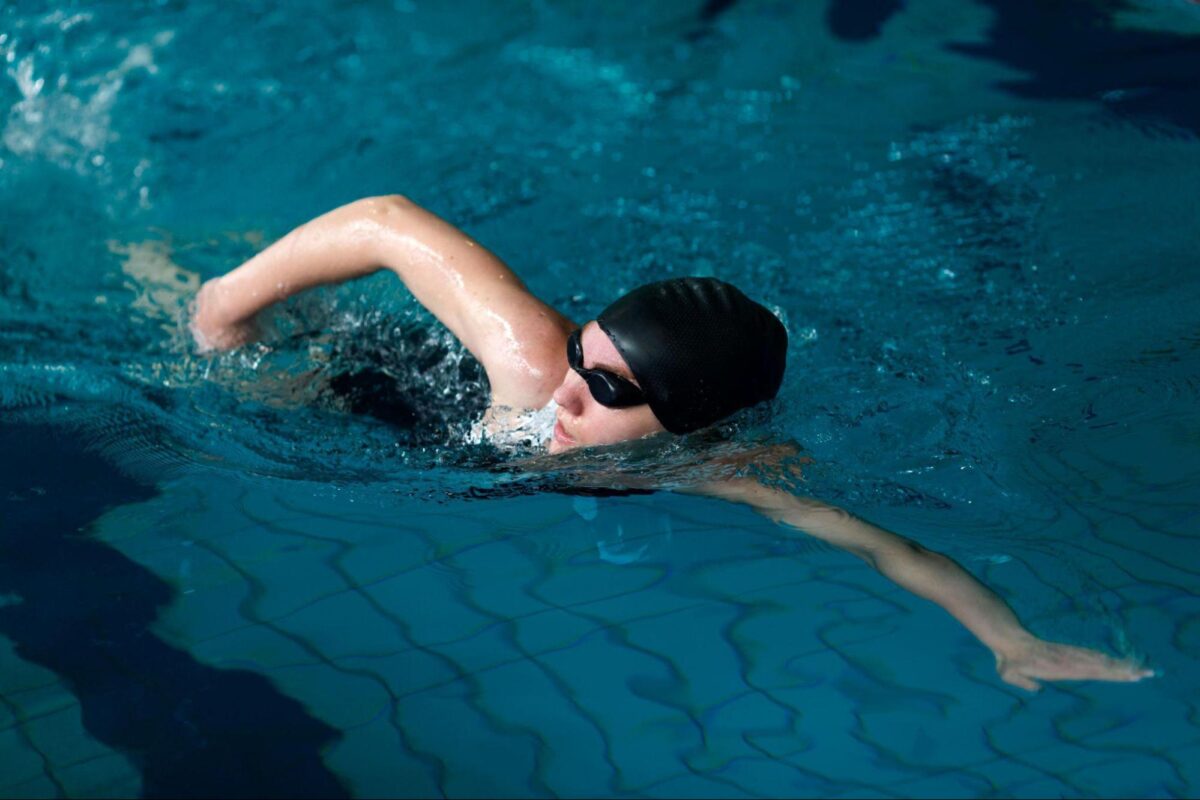
The freestyle stroke, also called the front crawl, is widely regarded as the fastest swimming stroke. It combines a flutter kick with alternating arm movements for strong forward propulsion.
- Maintain a streamlined body position, keeping your head in line with your spine and your body parallel to the water’s surface.
- Practice the flutter kick by moving your legs up and down in a relaxed manner, avoiding excessive knee bending.
- Coordinate your alternating arm strokes to propel your body efficiently through the water.
- Focus on breathing: inhale through your mouth when your face comes out of the water, and exhale steadily through your nose while submerged.
- As you improve, practise alternating breaths on both sides to enhance balance, efficiency, and endurance.
- Combine arm rotation and flutter kick smoothly for controlled, powerful, and continuous motion in the water.
2. Backstroke
The backstroke is performed on your back, combining a flutter kick with alternating arm movements, similar to freestyle, but with the body facing upward. It helps improve back strength, core stability, and swimming endurance.
- Float on your back, keeping your body horizontal, your arms extended overhead, and your face relaxed, looking upward.
- Practice a steady flutter kick while maintaining a relaxed posture to stay balanced on the water’s surface.
- Pay attention to your breathing, taking care not to inhale too deeply, which can cause your body to sink or your face to submerge.
- Once you are comfortable with your leg motion and breathing, introduce arm movement, alternating strokes with high elbow recovery.
- Focus on a smooth hand entry into the water while coordinating arms and legs for continuous, controlled propulsion.
3. Survival Backstroke
The survival backstroke is a variation of the standard backstroke designed to conserve energy while keeping swimmers afloat for longer periods. It is particularly useful in water rescues or situations where endurance and calm movement are essential. Unlike the conventional backstroke, this swimming stroke focuses on slow, controlled motions that maintain steady propulsion with minimal energy expenditure.
- Float on your back, keeping your body straight and relaxed, with arms partially submerged and bent to make small, circular movements.
- Perform a circular leg motion with your feet. Bend the knees, then move your feet upward, outward, and backward in a smooth circle, coordinating with the arm movement.
- Keep your arms and legs moving together to generate forward propulsion while conserving energy.
- Maintain natural, calm breathing throughout the stroke, exhaling as you move forward to stay relaxed and afloat.
4. Breaststroke
The breaststroke, also known as frog style, is characterized by simultaneous arm and leg movements that resemble a frog in water. This swimming stroke provides full-body engagement and allows for controlled, steady propulsion.
- Lie face down in the water with your body parallel to the surface.
- Start by practising the kick: bend your knees, draw your heels toward your hips, then extend your legs outward before bringing them together.
- As your legs kick, coordinate the arm movement by pulling your hands toward your chest and then pushing them forward and outward in a circular motion.
- Synchronize your breathing with the arm strokes: inhale as you pull your arms in and exhale as you extend them forward.
- Combine the leg and arm actions smoothly to create continuous, efficient motion through the water, mimicking the frog’s fluid movement.
5. Butterfly Stroke
The butterfly stroke is known for its intensity and coordination, making it one of the most demanding yet rewarding styles to master. To succeed with this swimming technique, focus on timing and rhythm rather than raw speed.
- Begin by practising the dolphin kick, keeping your legs together and moving them in a wave-like motion.
- Generate movement from your hips and core instead of relying solely on your legs.
- As your lower body drives forward, pull both arms through the water simultaneously in a wide, circular motion.
- Recover your arms together over the water, sweeping them forward in one fluid motion.
- Take a breath as your arms lift out of the water, then return your face down before the next kick.
- Combine all movements with a consistent rhythm to maintain control and forward momentum.
6. Sidestroke
The sidestroke is a practical swimming technique commonly used for extended distances and in emergencies, rather than in competition. Its controlled pace and side-facing position allow swimmers to conserve energy while maintaining steady movement in the water.
- Float on one side, your body aligned, with one arm stretched overhead and the other positioned alongside your body.
- Practise the scissor kick by moving one leg forward while the other moves backward, then bringing them together to drive forward motion.
- Use your arms in coordination, pulling the top arm down toward your hip as the lower arm sweeps forward.
- Return both arms to their starting positions in a smooth sequence to maintain rhythm.
- Keep your head comfortably above water to allow relaxed breathing throughout the stroke.
- With practice, this technique becomes especially useful for controlled swimming and assisting others during life-saving situations.
Master Swimming Strokes with Expert Guidance at Marsden Swim School
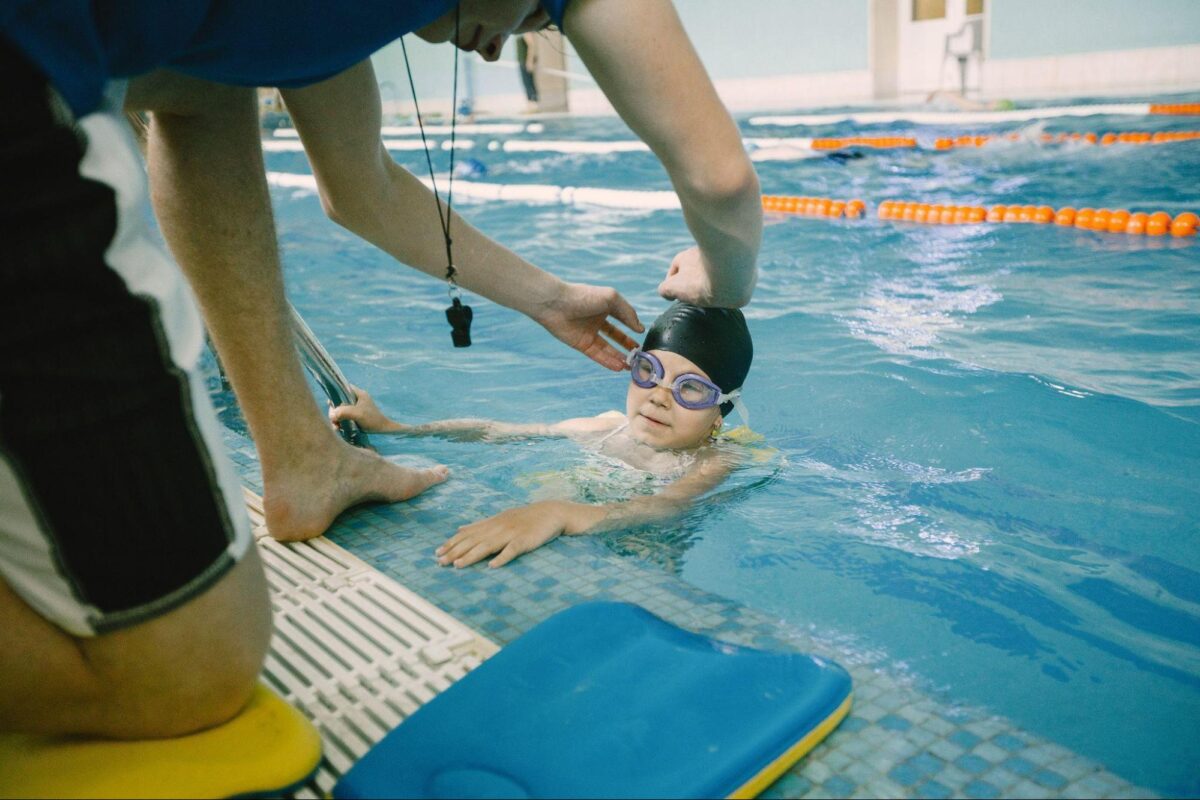
Learning different swimming strokes can improve full-body fitness, technique, and water safety. However, perfecting these strokes takes proper guidance. This is what we offer at Marsden Swim School.
Our experienced coaches provide swimming lessons for kids and adults, with classes tailored to all ages. From fun water exploration for little ones to refined stroke techniques for teens and adults, each class is thoughtfully designed to match individual learning needs.
Moreover, we offer both private and group swim lessons, allowing learners to choose between personalized attention and a social learning environment.
Enroll your child in our swimming course and give them the confidence, skills, and guidance they need to enjoy a safe, lifelong journey in the water.