Home » Blog » Do Baby Swimming Lessons Actually Help Development? Benefits Backed by Research

Do Baby Swimming Lessons Actually Help Development? Benefits Backed by Research

As a parent, you’ve probably questioned whether the benefits of baby swimming lessons justify the investment. The short answer? Yes. Infant swimming benefits extend far beyond water skills alone, offering documented advantages in development and safety. When babies engage in structured water activities from four to six months, measurable improvements emerge across motor development, cognitive function, and water safety awareness. 

Children aged one to four who receive formal swimming instruction show an 88% reduction in drowning risk (Brenner et al., 2009). Realistic expectations matter, though—a two-year-old won’t swim independently, but will establish foundational strength and comfort. This guide explores what evidence reveals about early water exposure and the genuine developmental advantages of baby swimming development through structured lessons. 

Learn more about our Newborn & Infant Swim Class 

Key Takeaways

  • Motor skill gains documented in controlled trials: Within ten to twelve weeks of consistent instruction, infants demonstrate significant improvements in gross and fine motor development using standardised assessment scales (Borioni et al., 2022)
  • Cognitive development through water activities: Executive functions—including working memory, inhibition, and response shifting—improve measurably in infants participating in structured aquatic programmes, demonstrating clear infant swimming benefits
  • Water confidence in babies foundation: Early lessons build age-appropriate survival awareness and water confidence in babies. A two-year-old gains foundational skills; independent swimming remains developmentally inappropriate at this stage
  • Drowning prevention as multi-layered protection: The benefits of baby swimming lessons include formal swimming programmes contributing to risk reduction alongside physical barriers and constant supervision as part of a comprehensive prevention strategy

Does Baby Swimming Actually Support Development? What the Research Shows

When babies enter water, their developing bodies experience natural resistance combined with buoyancy—conditions that fundamentally alter movement patterns. Understanding the benefits of baby swimming lessons requires examining how infant swimming benefits development measurably. The Peabody Developmental Motor Scales (PDMS-2), a standardised assessment tool, has documented these developmental shifts precisely. 

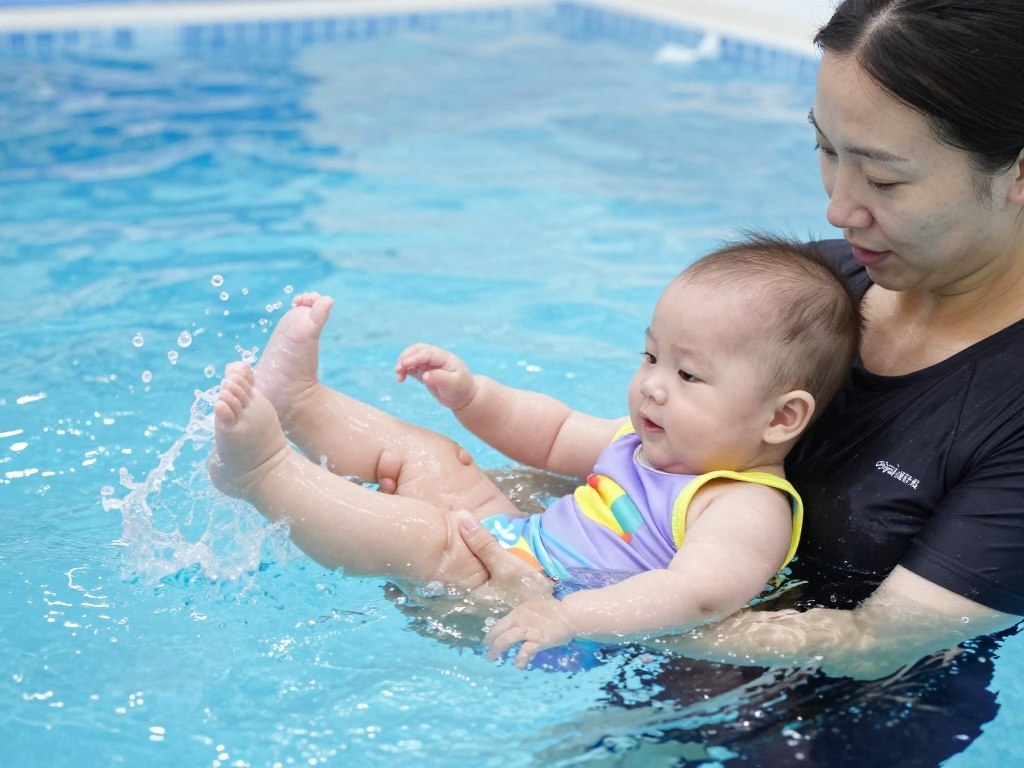
One peer-reviewed pilot study examined infants aged thirteen months over ten weeks (Borioni et al., 2022). Researchers assigned infants to either a structured water programme or a control group, then measured motor development using the Peabody scales before and after intervention. The findings were significant: infants in the water programme showed measurable improvements in gross motor skills (large movements like rolling and reaching), fine motor skills (precise hand movements), and total motor development. 

The mechanism is straightforward: water resistance naturally strengthens muscles. A six-month-old reaching for a toy underwater must work against fluid resistance, simultaneously engaging shoulder, arm, and core muscles. The same movement on land requires substantially less effort. Over weeks of repeated, appropriately challenging movements, strength develops naturally. 

  • Key research finding: Measurable improvements in motor development emerged after ten weeks of consistent lessons—approximately two sessions weekly. Sporadic attendance did not produce equivalent results.
  • By twelve months, infants with consistent lesson attendance show improved balance, smoother movement transitions, and increased physical confidence compared to non-swimming peers. (Clinical Trial Registry, 2024)

Exploring the Key Benefits of Baby Swimming Development—Evidence and Reality

1. Physical Strength and Coordination Through Water Resistance

Understanding how baby swimming development progresses requires examining the water’s buoyancy effect. Water’s buoyancy fundamentally alters infant development by temporarily reducing gravitational demands, enabling movement ranges virtually impossible to achieve on land.

A five-month-old in water can move their arms and legs with a degree of freedom that terrestrial development cannot match. This expanded movement range is precisely what accelerates physical capability, contributing directly to the infant swimming benefits observed in controlled trials. Consistent aquatic progression produces faster development through this increased range of motion. 

The architectural differences between water-based and land-based motor learning include:

Development Area 

Land-Based Learning

Water-Based Learning

Movement Range

Strictly limited by gravity.

Extended through hydrostatic buoyancy.

Muscle Engagement

Single-motion focus.

Multi-directional resistance against water.

Balance Development

Linear forward and backward patterns.

Three-dimensional spatial awareness.

Coordination Challenge

Sequential, single-limb movements.

Simultaneous, multi-limb bilateral control.

Measurable progression: A structured programme held once weekly for 30 minutes over two months produces documented motor gains in infants aged three to twelve months. Sporadic or unstructured attendance does not generate equivalent milestones. 

Clinical trials utilising the Alberta Infant Motor Scale (AIMS) and Early Motor Development Questionnaire (EMQ)—both highly validated, standardised assessment tools—identified measurable advancements in gross motor skills and percentile rankings among infants with regular water exposure compared to non-swimming control groups (NCBI archives). 

2. Building Water Confidence in Babies—Psychological Foundation

Water confidence differs fundamentally from water safety skills. Confidence is psychological comfort; safety is practical knowledge. 

A baby with genuine water confidence views the pool as a friendly, exploratory space rather than something to fear. This psychological foundation shapes their willingness to engage with new learning both in and beyond the water environment. 

Research and developmental best practice indicate this confidence builds through:

  • Repeated positive experiences in warm, safe, supervised water
  • Gradual progression from observation to participation—never forced submersion
  • Parent presence provides emotional security (evidence supports parent-in-pool for early developmental stages)
  • Consistent, predictable lesson structures create psychological safety
  • Celebrating achievements and brave attempts

The emotional security created during lessons extends beyond the pool. Infants who learn that trying new things—with appropriate support—leads to success become more willing to explore and learn generally. This foundation shapes resilience and curiosity throughout childhood. Building strong water confidence in babies during the early years has lasting developmental benefits. 

Best practice note: Parent-child lessons consistently outperform separate infant classes because parental presence provides the emotional security necessary for learning. The shared experience strengthens both child confidence and parent-child attachment. 

View Our Pool Facilities

3. Drowning Prevention: The Critical Safety Layer—Three-Layer Protection Model

Drowning remains a leading cause of unintentional injury death for children aged one to four. Water safety requires multi-layered protection.

Guidelines from the American Academy of Paediatrics and Canadian Paediatric Society identify three essential layers: 

H3: Layer 1: Physical Barriers

  • Four-sided pool fencing with self-closing gates
  • Secure supervision zones
  • Proper pool maintenance and safety standards

Layer 2: Constant, Attentive Supervision

  • Adult presence (never reliant on flotation devices as substitutes)
  • Clear water safety rules and enforcement
  • Adult awareness and engagement throughout

Layer 3: Skills & Age-Appropriate Water Awareness

  • Survival skills matched to developmental stage
  • Water confidence and genuine comfort
  • Understanding of personal water limitations

Children aged one to four who receive formal swimming instruction demonstrate an 88% reduction in drowning risk compared to those without training. This difference underscores why the benefits of baby swimming lessons matter for safety outcomes. 

However, realistic expectations are essential. A two-year-old will not swim independently across a pool. Developmentally, that’s impossible regardless of instruction quality. Instead, young children build foundational awareness: how to respond to water entry, how to float with support, and how to process verbal instructions around water.

By age four to five, children typically develop more independent survival skills. Younger children benefit from safety awareness foundations being established now.

When Should Babies Start Water Activities? Developmental Readiness

Different age brackets require distinct approaches. This competency-based progression strictly respects an infant’s psychological and physical developmental stages: 

1. Four to Six Months: Readiness Assessment

  • Requirement: Adequate, independent head control and comfort with novel environments. As documented by the Mayo Clinic’s Guide on Infant Development, around 4 to 6 months is when babies fundamentally build core trunk control and hand-eye coordination.
  • Focus: Observing your baby’s subtle readiness and stress signals.
  • Process: Initial trial assessments help determine individual physiological readiness. 

2. Six to Twelve Months: Water Familiarisation Foundation 

  • Activities: Splashing, floating with full hydrostatic support, and gentle water exploration.
  • Parental Role: Serving as the primary source of emotional security alongside a qualified instructor.
  • Duration: Strictly limited to 30-minute sessions to prevent infant hypothermia and physical fatigue.
  • Frequency: One session weekly is sufficient for documented milestone progression. A controlled trial published via PubMed’s Case-Control Study on Water Activities confirms that just one 30-minute structured session per week over 9 weeks yields statistically significant advancements in infant gross motor scores. 

3. Twelve to Twenty-Four Months: Building Basic Aquatic Skills

  • Activities: Controlled submersion practice, structured floating patterns, and basic kicking movements.
  • Parental Role: Active encouragement paired with continuous hands-on assistance.
  • Duration: Maximum of 30-minute sessions to ensure the toddler remains engaged without overexertion.
  • Frequency: One to two sessions weekly.

4. Twenty-Four to Thirty-Six Months: Developing Foundation Independence

  • Activities: Voluntary breath control, directional movement, and supported independence.
  • Parental Role: Distanced guidance to foster increasing child autonomy.
  • Duration: Maximum of 30 to 45 minutes, heavily dependent on water temperature and the child’s stamina.
  • Frequency: One to two sessions weekly.

Learn more about our Swimming Class for Kids 

Verified Signs of Developmental Readiness

Before enrolling a baby in a formal aquatic programme, parents should look for verified developmental markers archived in the National Center for Biotechnology Information (NCBI) Database. These include the ability to sit independently, a positive response to simple verbal cues, a willingness to explore unfamiliar settings, and emotional comfort with trained adults in low-stress contexts. 

What Quality Instruction Looks Like: Evidence-Based Practices

Instruction quality significantly impacts both aquatic safety and child developmental outcomes. The benefits of baby swimming lessons depend entirely on instruction quality, structured progression, and instructor expertise. 

1. Instructor Qualifications and Credentials

Quality programmes are defined by the rigorous training and active certifications of their coaching staff. To ensure the highest layer of safety and pedagogical excellence, instructors must hold:

  • International Swimming Teaching Accreditation: A valid licence specific to infant and toddler aquatics from a globally recognised body such as AUSTSWIM, which is highly regarded within Singapore’s premium aquatic sector.
  • CPR/AED Certification Standard: Current cardiopulmonary resuscitation and automated external defibrillator credentials officially vetted by the Singapore National Resuscitation and First Aid Council (NRFAC).
  • Life Saving Society Qualifications: Active lifesaving and deep-water rescue credentials, such as the Bronze Medallion certified by the Singapore Life Saving Society (SLSS).
  • Continuing Professional Development: Mandatory ongoing training and professional development points required to maintain an active teaching licence, ensuring coaches are consistently versed in modern paediatric sports science.

2. Lesson Structure and Psychological Safety

Pediatric research dictates that early aquatic instruction must be rooted in positive reinforcement rather than rigid compliance.

  • Play-Based Progression: Introducing structural skills through purposeful play, song, and exploration, which promotes spatial awareness.
  • Non-Forced Submersion: Strict avoidance of forced submersion or pressure-based methods. This eliminates the risk of water anxiety and psychological trauma.
  • Gradual Scaffolding: Breaking down complex actions (such as breath control) into small, developmentally appropriate steps.
  • Enforced Safety Protocols: Consistent, visible pool-side rules that teach infants and parents boundaries around the water’s edge.

Read What Do Kids Actually Learn in Swimming Classes? Skills, Safety & Confidence Explained 

3. Facility and Environmental Standards

Because infants cannot efficiently regulate their core body temperature, environmental controls are a critical safety barrier, especially in climate-controlled indoor teaching pools in Singapore.

  • Thermal Regulation: Water temperature must be maintained at a minimum of thirty-two degrees Celsius for infants to prevent hypothermia and physiological distress.
  • Sanitation: Advanced filtration systems to ensure cleanliness and strict compliance with Singapore National Environment Agency (NEA) pool water quality regulations, keeping chemical irritants low while maximising hygiene.
  • Design Accessibility: Age-appropriate pool design tailored for parent-child groups.

4. Class Size and Ratios

The density of an aquatic class directly correlates with cognitive engagement and physical safety.

  • The Five-Child Limit: National coaching frameworks and best practices recommend a maximum ratio of five children per early-level class.
  • Individualised Attention: Smaller class sizes allow the instructor to monitor subtle physical cues, such as fatigue or a lapse in head control.

5. The Critical Role of Parental Involvement

Structured parent-child lessons consistently outperform independent infant classes. A parent’s presence provides the psychological security required by attachment theory. Quality programmes deliberately structure activities to strengthen this parent-child bond while building water confidence in babies. 

Expected Timeline of Progression

Expect progression spanning several weeks rather than days, as documented in clinical trials published via the National Center for Biotechnology Information (NCBI). This gradual approach respects developmental capacity whilst building genuine competence:

  • Weeks 1 to 3: Initial sessions focus strictly on environmental comfort and water familiarisation.
  • Weeks 4 to 7: After several weeks of comfort, the introduction of gentle, voluntary submersion practice begins.
  • Week 8: Response patterns and muscle memory strengthen measurably.
  • Week 12: Typically shows documented and visible developmental gains in motor control and spatial confidence.

Read How Long Does It Take for a Child to Learn Swimming? A Realistic Timeline for Parents 

Addressing Safety Concerns—Evidence vs. Myths

Fact 1: Newborns possess natural reflexes.

Newborns naturally possess a mammalian diving reflex. When water contacts their face, babies instinctively hold their breath and reduce their heart rate. This reflex persists through early childhood. It’s not foolproof protection—proper instruction and constant supervision remain essential—but it does represent genuine protective physiology, not a dangerous instinct. 

Fact 2: The gag reflex provides additional protection.

The gag reflex protects against water inhalation. When taught correctly by trained instructors, babies learn to manage water contact safely. Trained instructors work with these natural reflexes rather than against them.

Fact 3: Lessons from one protection layer only.

Swimming instruction contributes to drowning prevention as part of a multi-layered strategy. Barriers, constant supervision, family water safety knowledge, and CPR training remain equally critical. No single skill replaces vigilant adult presence around water.

Fact 4: Age-appropriate expectations matter.

A two-year-old will not achieve independent swimming. That’s developmentally impossible. However, they build foundational awareness, confidence, and survival skills appropriate to their developmental stage. These foundations serve them throughout childhood.

Frequently Asked Questions

1At what age is it safe to start baby swimming lessons with proper instruction?

Most developmental experts recommend beginning around four to six months once adequate head control is established. Quality trial assessments help determine individual readiness. Your health visitor can advise based on your baby's specific development. The benefits of baby swimming lessons depend more on instruction quality than starting age. 

2How often should babies attend lessons to achieve documented developmental benefits?

Consistency matters measurably more than frequency. Research shows that one or two sessions weekly, maintained regularly over eight to twelve weeks, produce documented motor and cognitive gains. Sporadic attendance does not generate equivalent improvements. Regular exposure allows neural pathways and muscle development to strengthen genuinely. 

3What physical safety measures should quality instruction include?

Quality instruction includes: proper water temperature maintenance, maximum class size standards, trained instructor qualifications, gradual progression protocols, constant supervision, and clear safety procedures. Ask potential instructors about their credentials, class sizes, facility standards, and safety protocols. 

4Will lessons eliminate drowning risk?

No single measure eliminates drowning risk. Lessons from one protective layer. Barriers, constant supervision, family water safety knowledge, and CPR training remain equally essential. Approach early swimming as building developmental foundations and age-appropriate water awareness rather than drowning-proofing. 

What Sets Marsden Apart

AUSTSWIM Gold Standard Tier-1 Accreditation — Singapore’s only school holding this credential

Internationally-trained coaches — Every instructor certified, with ongoing professional development

Competency-based progression — Your child advances when developmentally ready, never by age alone

Small, personalised classes — Maximum five per group ensures individual attention

Heated, covered facilities — Climate-controlled pools designed for infant safety and comfort

Parent-in-pool instruction — Early levels require parent involvement for emotional security and bonding

Digital progress tracking — App-based system keeps you connected to every milestone

Proven longevity — 25+ years serving Singapore families

Learn More About Our Progression Levels

Ready to Begin Your Child’s Swimming Journey?

Research confirms early water exposure builds lifelong developmental foundations. The proven benefits of baby swimming lessons extend from motor coordination to genuine water confidence in babies. Maximising these benefits requires an expert, small-group environment led by coaches who understand child development and the science of infant swimming benefits. 

Marsden Swim School prioritises personalised instruction with a 25-year legacy of excellence. Every coach holds international accreditation, and classes maintain a strict maximum ratio of five children. Your baby deserves research-backed baby swimming development instruction and genuine care. 

Book a Trial Class at Marsden Now 

📧 admin@marsdenswimschool.com

📱Phone: 6015 0637

📍 Main Address: 102 Jalan Jurong Kechil, Singapore 598602

🕐 Operating Hours: Monday to Sunday, 10am – 6pm

🌐 Website: https://marsdenswimschool.com
Reference List

  1. The Motor and Cognitive Development Study (Borioni et al., 2022)
  • Citation: Borioni, I., Marini, S., & Di Cagno, A. (2022). A non-randomized pilot study on the benefits of baby swimming lessons on early motor development. International Journal of Environmental Research and Public Health, 19(15), 9262.
  • Database Link: Available via the National Center for Biotechnology Information (NCBI) Archive
  1. The 88% Drowning Risk Reduction Study (Brenner et al., 2009)
  • Citation: Brenner, R. A., Taneja, G. S., Haynie, D. L., Trumble, A. C., Smith, C., Kovar, M. G., & Scheidt, P. C. (2009). Association between swimming lessons and drowning in childhood: A population-based case-control study. Archives of Pediatrics & Adolescent Medicine, 163(3), 203–210.
  • Database Link: Available via the JAMA Network Repository / PubMed Index
  1. The Case-Control Infant Motor Progress Evaluation (Clinical Trial Registry, 2024)
  • Citation: Clinical Trial Registry. (2024). Supporting infants’ motor development through water activities: A preliminary case-control study using AIMS and EMQ scales. International Journal of Environmental Research and Public Health, 21(8), 1035.
  • Database Link: Available via the National Center for Biotechnology Information (NCBI) Trial Index
  1. The Pediatric Framework on Safety Barriers & Early Lessons (Canadian Paediatric Society)
  • Citation: Canadian Paediatric Society, Injury Prevention Committee. (2003, Reaffirmed 2018). Swimming lessons for infants and toddlers. Paediatrics & Child Health, 8(2), 113–114.
  • Database Link: Available via the PubMed Central Index