

How to Improve Swimming Technique: 10 Tips to Become a Better Swimmer
by Coach Mark
Swimming isn’t just about moving through the water but about moving well, and that’s where technique makes all the difference. By making minor adjustments in your swimming technique, you can swim better with every lap.
For example, focusing on body alignment, improving your breathing rhythm, and keeping your strokes smooth can boost efficiency. Similarly, practicing proper arm entry and maintaining a relaxed kick helps you stay balanced, glide through the water with less resistance, and enjoy a more controlled, powerful swim.
1. Learn the Basics First
Before moving on to advanced techniques, get comfortable with the fundamentals first.
- Learn to float confidently and stay balanced in the water.
- Keep your body straight and streamlined to reduce drag.
- Look straight down to maintain a neutral head position, which naturally lifts your hips.
- Avoid letting your legs sink, as this increases resistance and makes swimming more tiring.
2. Improve Your Breathing Technique
Once your body position feels stable, the next step is to improve your breathing technique, as proper airflow helps keep you relaxed during swimming.
- Exhale fully while your face is underwater, rather than holding your breath.
- Turn your head to the side to take a quick, calm inhale.
- Avoid lifting your head too high, which can disrupt your body alignment.
- Coordinate your breathing with each stroke to maintain a steady rhythm and feel more in control.
3. Strengthen Your Kick
The next focus is on your kick, as strong, controlled legs enhance both propulsion and balance in the water.
- Generate movement from the hips rather than bending at the knees for smoother motion.
- Keep your kicks small and quick instead of large and forceful, which can slow you down.
- Practice with a kickboard to isolate your legs and build strength.
4. Fine-Tune Your Stroke Technique
Improving your stroke technique can help you swim faster without wasting energy.
- Let your hands enter the water smoothly in line with your shoulders.
- Extend forward before pulling to maximize propulsion.
- Avoid crossing your arms over the center of your body, which can disrupt balance and direction.
- Keep your pull straight and steady to maintain strong forward momentum.
5. Increase Your Stamina
To swim without tiring quickly, it’s important to develop stamina, which helps you handle short bursts of effort while staying strong throughout your session. Interval training is one of the best ways to achieve this because it requires your body to adapt to changing speeds.
- Alternate between moderate-paced laps and short sprints to push your limits.
- Use timed intervals to increase the intensity and duration of your efforts gradually.
- Focus on controlled breathing throughout each set to maintain energy and recover quickly.
- Repeat intervals consistently to train your muscles and lungs for repeated exertion.
6. Develop Long-Distance Endurance
For swimming longer distances, building endurance is key, as it allows you to maintain a steady pace without feeling fatigued. This involves strengthening your cardiovascular system and overall aerobic capacity by challenging your body with longer swims.
- Swim continuously at a steady pace to train your body for long-duration effort.
- Gradually increase your swim time in each session to improve your swimming endurance.
- Incorporate cross-training such as running, cycling, or other cardio exercises to strengthen your heart and lungs.
7. Use Swim Drills
Incorporating drills into your swimming practice is a great way to improve your form and correct common technique mistakes, because targeted exercises train specific aspects of your stroke.
- Try the finger-drag drill, lightly dragging your fingertips along the water during arm recovery to encourage a high elbow position.
- Practice the catch-up drill, moving one arm completely forward before starting the next stroke to enhance timing and coordination.
- Use the fist drill, swimming with closed fists, to focus on generating propulsion through the forearms.
- Work on the streamline kick, extending your arms forward and keeping your legs straight to maximize glide and reduce drag.
8. Build Core Strength and Work on Mobility
A strong core and good mobility are essential for swimming, as they help maintain balance, stabilize your body, and reduce movements that slow you down. To achieve that, you can perform targeted exercises off the pool deck.
- Practice core exercises like planks, leg raises, and hollow holds to enhance stability in the water.
- Include stretching routines or yoga to improve flexibility in your shoulders, hips, and ankles.
- Focus on mobility drills such as shoulder circles, hip rotations, and ankle stretches that increase your stroke’s range of motion.
9. Learn to Control Your Pace
Swimming isn’t just about speed; it’s about managing your energy so you can maintain consistent effort throughout your class. Learning to pace yourself helps prevent early fatigue and keeps your strokes smooth over longer distances.
- Avoid starting too fast, which can drain you quickly.
- Swim at a steady, manageable pace to sustain effort over the entire session.
- Count your strokes per lap to monitor your performance and reduce unnecessary movements.
10. Monitor Your Progress
Monitoring your swimming sessions is key to seeing improvement in your techniques and staying committed. By tracking your performance, you can spot patterns, celebrate small wins, and adjust your training as needed.
- Record swim distances, times, and stroke counts after each session.
- Reflect on how each workout feels to identify strengths and areas for improvement.
- Set small, achievable milestones to stay consistent and motivated.
- Review your progress regularly to recognize improvements and plan the next steps.
Improve Your Swimming Technique with Marsden Swim School
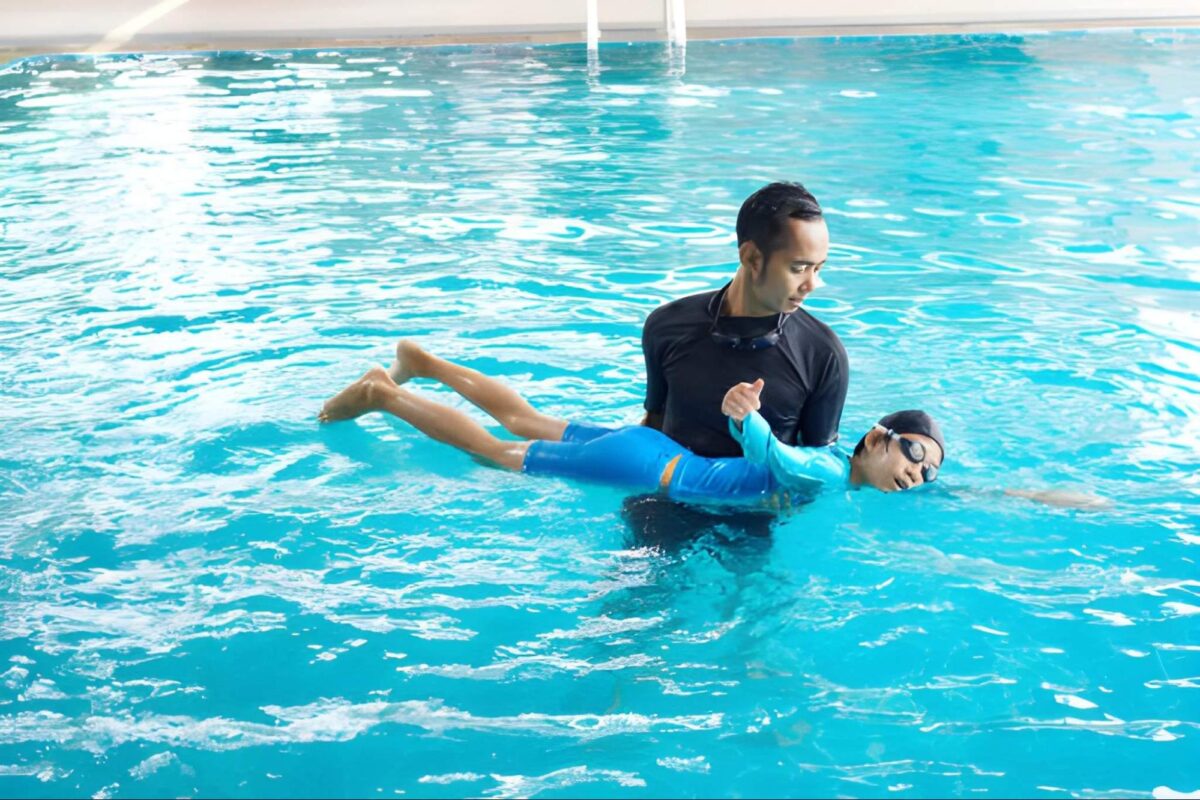
By following the above-listed tips, you may be able to improve your swimming technique; however, it is still advisable to learn from professional experts.
At Marsden Swim School, we offer swimming lessons for kids and adults, led by certified coaches. We emphasize teaching proper technique to prevent common swimming mistakes. With small class sizes, personalized attention, and options for private and group swim lessons, every swimmer can improve at their own pace in a supportive environment.
Contact us today to learn more about our swimming classes in Singapore.