Is It Safe for Newborns to Start Swimming Lessons? What Parents Need to Know First
Many parents wonder whether infant swimming lessons are safe and when their babies are ready for the pool. The answer is encouraging: with proper guidance and age-appropriate programmes, infant swim classes can be safe and beneficial.
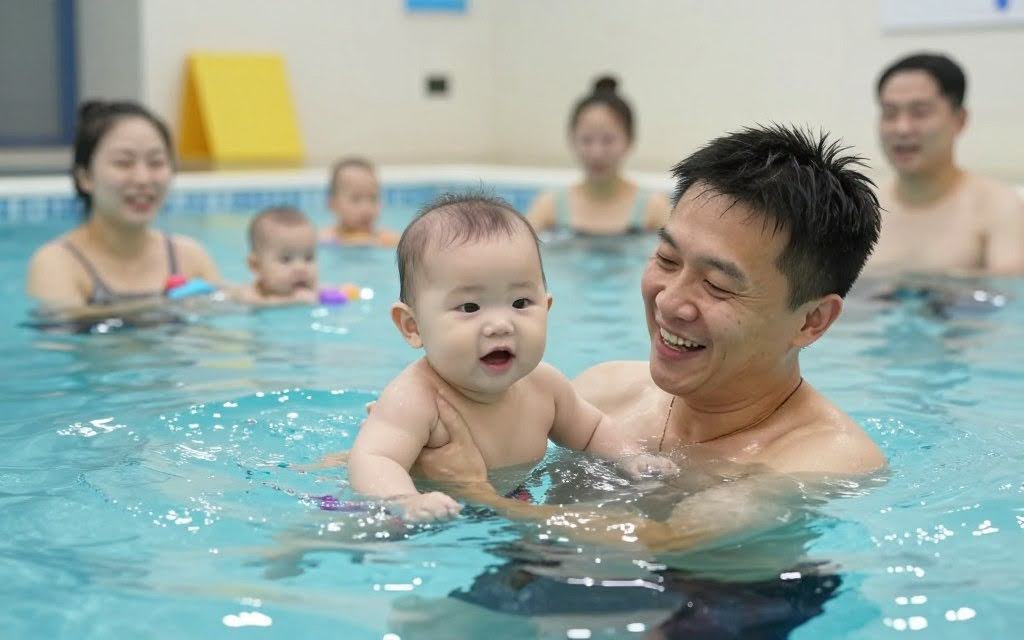
Structured aquatic programmes designed for babies from four months introduce essential water safety skills and support early motor development. Understanding the right timing, safety protocols, and what makes a programme genuinely safe helps you make confident decisions about your baby’s first splash.
Key Takeaways
- Babies can begin structured swimming lessons from four months of age, with parent participation and trained instructors
- Early water exposure supports physical development, motor skills, and water safety awareness
- Proper pool temperature (33°C), sanitation, and supervision are essential safety factors
- A 2009 study found children aged 1–4 with swimming instruction were associated with lower drowning risk, but lessons are one protective layer among many
- Understanding your baby’s readiness helps determine the ideal time to start
When Can Babies Start Swimming? Understanding the Right Age
Most paediatric experts recommend waiting until your baby reaches four months old before formal infant swimming lessons. At this age, babies have better head and neck control, making water activities safer and more effective.
Babies under four months have reflexes that look like swimming ability, but these are involuntary responses that disappear around six months. They don’t indicate true readiness for structured lessons.
By four to six months, most infants show readiness signs:
- Steady head control without support
- Increased awareness of surroundings
- Immune systems mature enough to handle pool environments
- Comfort during bath time
- Responsive to parent cues
Starting at four months allows your baby to build water familiarity gradually and safely with your support.
View our Swimming Class for Kids
Essential Safety Standards for Infant Swimming Lessons Safety
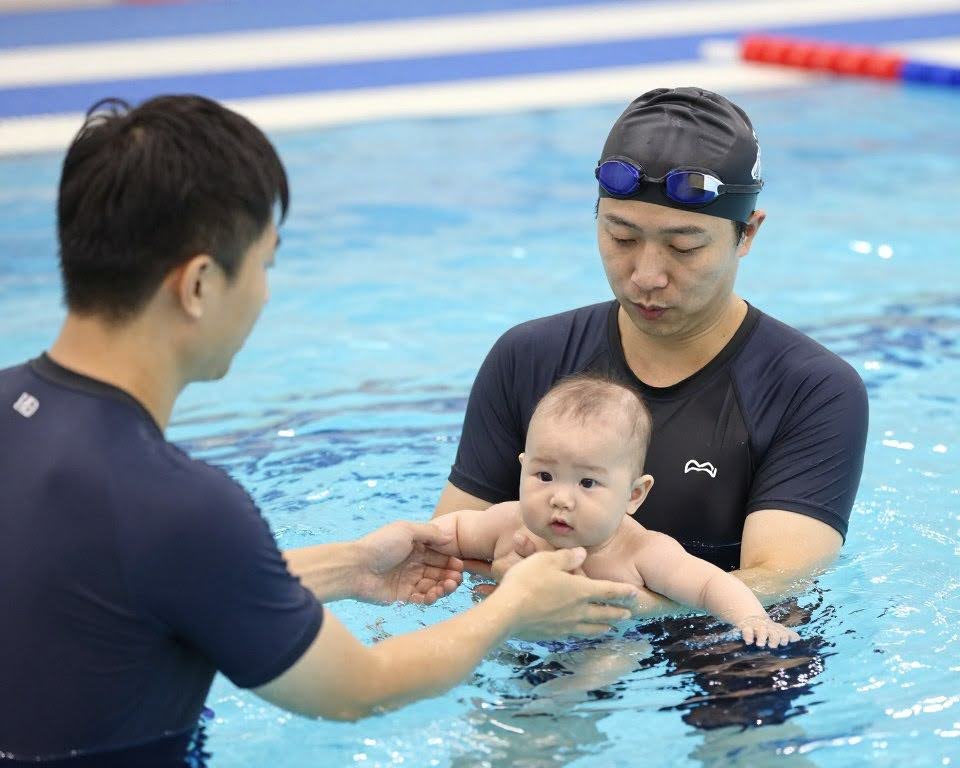
Following proper infant swimming lessons safety guidelines ensures your infant’s first aquatic experiences remain positive and secure.
- Water temperature: Babies lose body heat quickly, so pool temperature should be 32–34°C. Cooler water risks hypothermia; warmer temperatures cause discomfort.
- Chlorine balance: Maintain levels between 1–3 parts per million to balance sanitation with skin safety. Saltwater pools offer a gentler alternative for sensitive skin.
- Session length: 20–30 minutes prevents fatigue and temperature drops. Very young infants (4–6 months) may start with 15–20 minute sessions.
- Class size: Maximum 4 babies per instructor ensures individual attention and safety.
- Supervision: Parent stays in the water with your baby, allowing immediate response to any needs.
- Hygiene: Use proper swim nappies, shower before and after, and rinse thoroughly to remove chlorine or salt residue.
Read What Do Kids Actually Learn in Swimming Classes? Skills, Safety & Confidence Explained
Benefits of Early Swimming Lessons
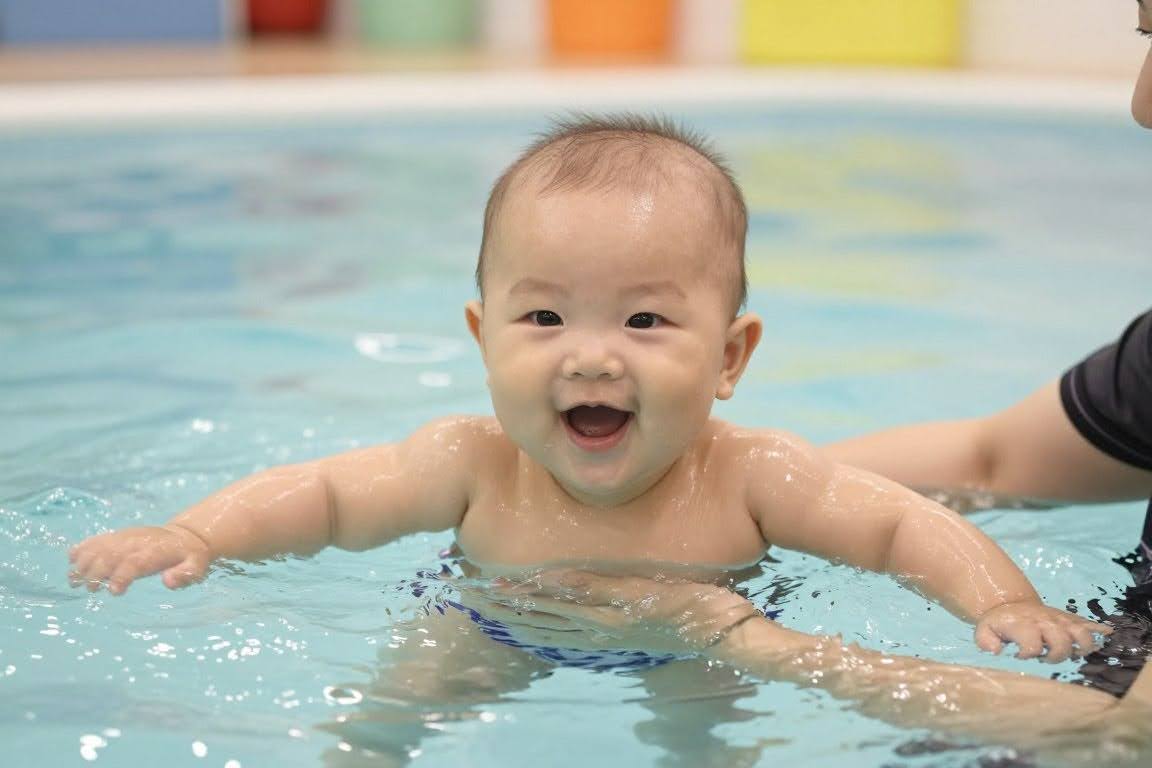
The benefits of infant swimming lessons extend beyond water skills alone. Physical development improves as water’s buoyancy supports your baby’s body weight, allowing movements impossible on land. This freedom builds strength, coordination, and core muscles. Water resistance gently challenges developing muscles without impact stress.
- Water safety foundation: Early lessons teach fundamental skills — comfort with water on their face, breath control, and grabbing pool edges. These create a baseline of water competence.
- Confidence and bonding: Parent-child lessons provide quality time together. Babies build confidence in new environments while strengthening your connection.
- Cognitive development: Routine, pattern recognition, and learning through play all support brain development.
Choosing a Safe Infant Swim Programme
What to look for in quality infant swim classes:
Look for programmes that follow international infant water safety guidelines. The best programmes emphasise gentle, play-based learning with parent participation.
Key standards:
- Water temperature maintained at 33°C
- Maximum 4 babies per instructor
- Parent required in the water
- Trained instructors
- No forced submersion or aggressive techniques
- Clear health screening before class
- Proper swim nappy requirements
- Transparent emergency procedures
Red flags to avoid:
- Forcing submersion against your baby’s will
- Separating very young babies from parents during lessons
- Class sizes larger than 6 babies per instructor
- Vague or missing safety protocols
- No explanation of instructor qualifications
Frequently Asked Questions
Yes. Babies from four months can safely enjoy chlorinated pools when chlorine levels stay between 1–3 ppm. Always shower your baby before and after swimming to minimise exposure. Saltwater pools offer an even gentler option.
Sessions are kept short enough to avoid fatigue, with pacing adjusted for younger infants. Watch your baby’s cues, shivering, fussiness, or disengagement means it’s time to stop.
Look for gentle, play-based learning with parent participation. The programme should never force submersion. Water temperature should be consistent and warm, class sizes small, and instructors trained in infant water safety. Ask about emergency procedures and health screening.
Lessons contribute significantly to water safety. A 2009 study found that children aged 1–4 with swimming instruction were associated with lower drowning risk compared to those without training. However, lessons are one protective layer. Barriers, constant supervision, and water safety knowledge are equally essential.
Making the Right Choice for Your Baby’s Swimming Journey
Infant swimming lessons’ safety depends on choosing age-appropriate programmes, trained instructors, proper facilities, and evidence-based teaching methods. When these elements align, infant swim classes offer safe, enriching experiences.
Starting your baby’s aquatic journey from four months with a reputable programme provides a strong foundation for water competence and safety. Every baby develops at their own pace. Some take to water immediately; others need more time. Patient, responsive instruction ensures positive experiences that build genuine water confidence, not fear.
Book a Trial Class at Marsden Now
📱Phone: 6015 0637
📍 Main Address: 102 Jalan Jurong Kechil, Singapore 598602
🕐 Operating Hours: Monday to Friday (9am to 6pm), Saturday and Sunday (8am to 6pm)
🌐 Website: https://marsdenswimschool.com