What Age Should Children Start Swimming Lessons? A 2026 Guide for Singapore Parents
Parents often ask what age children should start swimming lessons, and the honest answer is: it depends on your child, not a fixed number. Readiness comes down to comfort in water, temperament, and how your child responds to new experiences, more than chronological age.
At Marsden Swim School, we welcome babies from 4 months in parent-accompanied lessons, an ideal starting point for building water safety for children early, and we assess every child individually rather than placing them by age alone. Whether you’re considering swimming lessons for toddlers or enrolling an older child for the first time, here’s what actually matters when deciding when to start.
Key Takeaways
- Readiness depends on your child’s comfort and temperament, not age alone.
- Swimming builds water safety awareness alongside physical and emotional development.
- Marsden welcomes babies from 4 months in parent-accompanied lessons, and children move into independent classes once they’ve turned 4.
- Progress is competency-based: children advance when they’ve mastered a skill, not on a fixed timeline.
Why Readiness Matters More Than Age Alone
When should a child learn to swim, then, if not by a fixed age? Age is a starting guide, not a rule. Some children take to water quickly; others need more time to feel comfortable, and both are completely normal. Fear of water at a young age is common, and gradual, gentle exposure tends to work better than pushing a child in before they’re ready. Your own comfort in the water matters too. Children often pick up on a parent’s anxiety, so a calm, relaxed adult in the pool helps set the tone.
Swimming Lessons for Toddlers: Starting Early
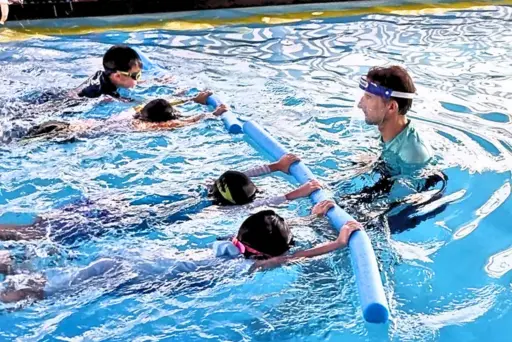
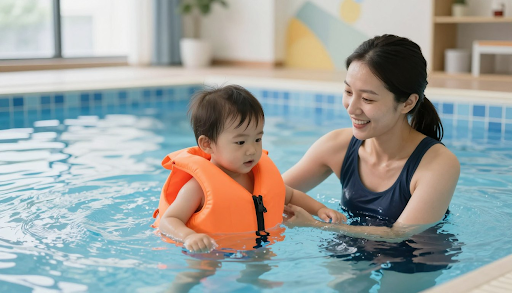
Marsden’s infant and toddler programme runs from 4 months to 4 years, with a parent in the pool throughout. These lessons aren’t about technique. They’re about building comfort with water on the face, basic floating with support, and a positive, trusting relationship with the water. This isn’t passive supervision; you’re actively part of your child’s learning at this stage. Our Bukit Timah and Potong Pasir pools are heated to 33°C, which helps keep younger children comfortable through longer sessions.
Benefits of Swimming Lessons for Kids
Physical Development
Swimming builds strength, coordination, and cardiovascular fitness together, in a low-impact environment that’s gentle on developing joints.
Water Safety
Structured lessons teach children how to float, stay calm in water, and recognise hazards. Swimming lessons are never a guarantee against drowning; supervision always remains essential. But building genuine water safety awareness from an early age is one of the most effective things a parent can do.
Confidence and Emotional Growth
Children build real confidence through small, earned children’s swimming milestones, floating independently for the first time, or finally landing a stroke they’d been working on for weeks. Progress like this teaches persistence in a way that carries into other parts of life.
Why Families Choose Marsden Swim School
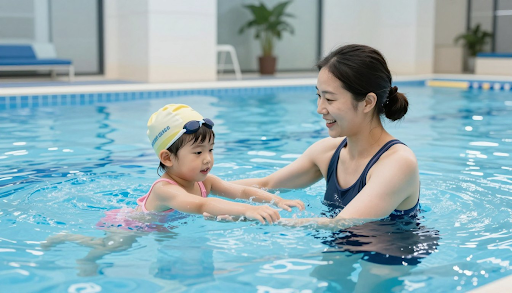
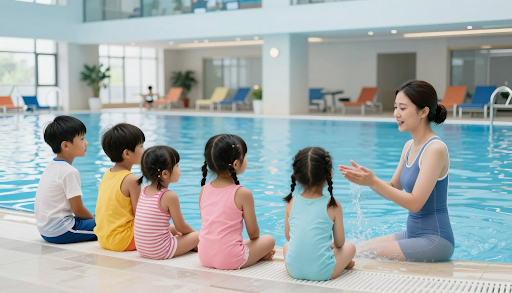
Marsden Swim School has been teaching swimmers in Singapore for over 25 years. Children are assessed individually at every stage rather than placed by age, and classes stay small: capped at 4 swimmers at Bukit Timah and Potong Pasir, and up to 5 at our other locations. Our Bukit Timah and Potong Pasir pools are heated to 33°C, ideal for younger children who need warmth and consistency. Progress is tracked through our online customer portal, so parents can follow their child’s journey every step of the way.
Practical Factors to Consider
Beyond readiness, a few practical things affect when and where to start:
- Location and consistency. Choose a pool you can reach reliably every week. Marsden operates at Bukit Timah (near Beauty World MRT), Potong Pasir, GESS at Dairy Farm Lane, and Delta Swimming Complex at Tiong Bahru.
- Class size. Smaller classes mean more individual attention.
- A proper trial lesson. A good swim school will assess your child individually during a trial, not place them by age alone.
Questions to Ask Any Swim School
Before enrolling, ask these essential questions:
- What is your competency-based progression system?
- What is your actual maximum class size?
- How is water safety integrated into every lesson?
- Can my child do a trial lesson for level assessment?
- How do you support anxious children or those with previous negative experiences?
- What’s your absence and make-up policy?
Frequently Asked Questions
Yes. Marsden welcomes children from 4 months in our parent-accompanied programme, so a 3-year-old is well within range. We assess each child individually at their trial lesson rather than enforcing a fixed age.
It depends on your child’s starting point and how regularly they attend. Every child moves through our Swim Level Progression at their own pace. Some progress quickly; others take more time to build a strong foundation, and both are entirely normal.
Yes. Early, gentle exposure builds comfort and body awareness that tends to make later progress smoother. Marsden’s infant programme is designed specifically for this stage, with a parent in the water throughout.
Ready to Start Your Child’s Swimming Journey?
The right age to start depends on your child, not a fixed number. We start at 4 months old: when it comes to water confidence, the earlier the better, since younger children still retain their natural affinity for water. At Marsden Swim School, we’ve guided Singapore families for over 25 years, with small classes and a genuinely individual approach to every child’s pace.
Book a Trial Class at Marsden Now
📱Phone: 6015 0637
📍 Main Address: 102 Jalan Jurong Kechil, Singapore 598602
🕐 Operating Hours: Monday to Friday (9am to 6pm), Saturday and Sunday (8am to 6pm)
🌐 Website: https://marsdenswimschool.com