Home » Blog » What Do Kids Actually Learn in Kids Swimming Lessons in Singapore? Skills, Safety and Confidence Explained

What Do Kids Actually Learn in Kids Swimming Lessons in Singapore? Skills, Safety and Confidence Explained

Every parent wants their child to be safe in the water. But when you sign up for kids swimming lessons in Singapore, you are investing in far more than the ability to swim a lap. You are giving your child a life skill, a confidence boost, and a safety foundation that stays with them for decades. So what actually happens in those lessons? What does your child walk away knowing after week one, month three, or year two? This guide breaks it all down — the skills, the safety, the milestones, and the moments that change how your child sees themselves. 

At Marsden Swim School, Singapore’s only Gold Standard AUSTSWIM-accredited swim school with over 25 years of experience, we have watched thousands of children go from nervous at the pool edge to thriving in the water. Here is exactly what that journey looks like.

📌Kids swimming lessons Singapore programmes teach water safety, breath control, floating, stroke technique, and spatial awareness. Beyond physical skills, children develop confidence, resilience, and independence. Structured programmes progress from water familiarisation to full stroke development, tailored to each child’s age and ability level.

Key Takeaways

✅ Kids swimming lessons Singapore cover water safety first, then technique, then stroke development.

✅ Swimming builds genuine confidence, discipline, and emotional resilience alongside physical fitness.

✅ Small class sizes accelerate skill progression and ensure each child receives individual attention.

✅ Water safety skills for kids reduce drowning risk by up to 88% in young children.

✅ Benefits of swimming lessons for kids extend well beyond the pool into everyday life and development.

What Is the First Thing Children Learn in Kids Swimming Lessons Singapore?

Comfort comes before technique in quality kids’ swimming lessons in Singapore. When a child feels tense or anxious in the water, learning becomes much harder and rushing this stage often leads to setbacks instead of progress. That’s why well-structured programmes always begin with water familiarisation before introducing any swimming strokes.

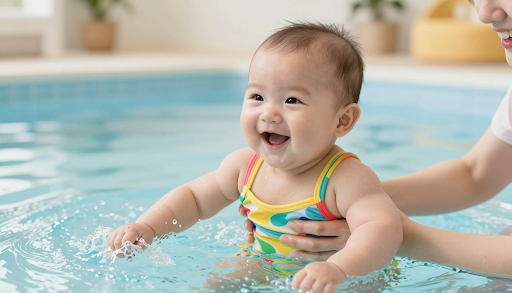
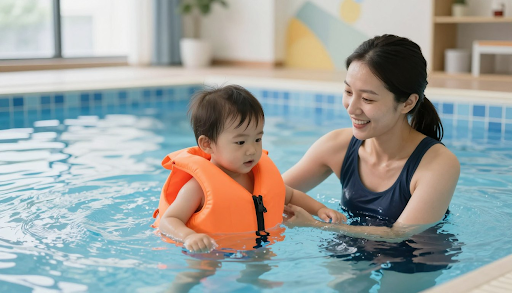
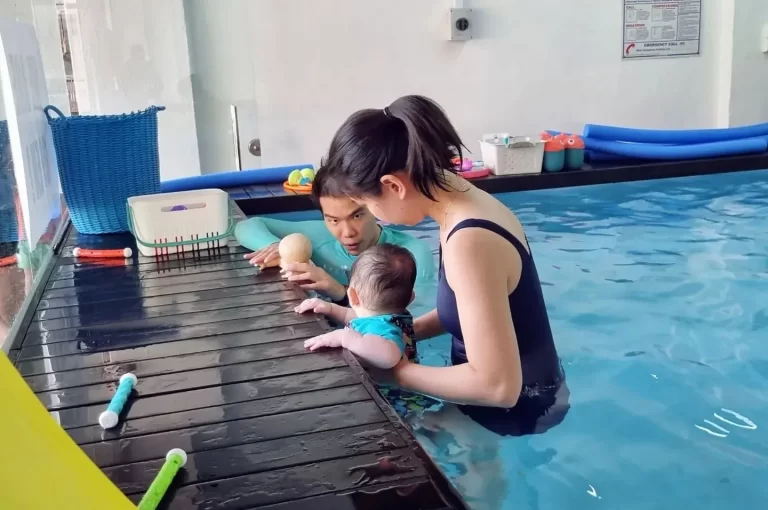
At Marsden, our youngest swimmers start from as early as four months through our infant and toddler programme. Long before any strokes are introduced, they learn to feel calm, safe, and comfortable in the water. This strong foundation supports every skill they develop as they progress.

1. Safe Water Entry and Exit

Children learn how to enter and exit the pool independently from the very beginning. This is a practical, fundamental water safety skill for kids that is often undervalued in early lessons. Knowing how to get in and out of a pool safely is one of the first genuinely protective skills a child acquires.

2. Breath Control and Submersion

Breath control is the cornerstone of all swimming. Children learn to hold their breath, exhale underwater, and time their breathing with body movement. This takes consistent practice, but once it clicks, every other skill becomes dramatically more accessible. Without confident breath control, strokes feel unpredictable. With it, the water begins to feel manageable and even enjoyable.

3. Floating and Body Position

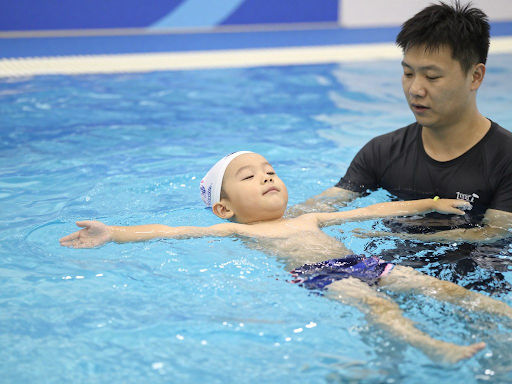
Front and back floating are introduced early in any quality programme. Floating is not simply a technique drill  but  it is a survival skill. A child who can float calmly on their back buys themselves critical time in an emergency situation.

📌Swimming lessons that incorporate floating and back float survival skills reduce drowning risk by up to 88% in children aged one to four. (Source: American Academy of Pediatrics, HealthyChildren.org)

What Swimming Skills for Children Are Built as They Progress?

Once a child is comfortable in the water and can manage breath control and body position, the focus shifts to propulsion and technique. Swimming skills for children build in sequence, with each new skill depending on the confidence and physical understanding developed through the previous one. This is why skipping stages always slows long-term progress.

1. Kicking and Arm Stroke Fundamentals

Kick technique is typically the first movement skill introduced. Children learn to kick from the hip rather than the knee, developing the long and efficient leg movement that underpins freestyle and backstroke. Arm movement is then layered alongside breathing patterns, and the two are coordinated progressively into a complete stroke cycle.

2. The Four Core Strokes

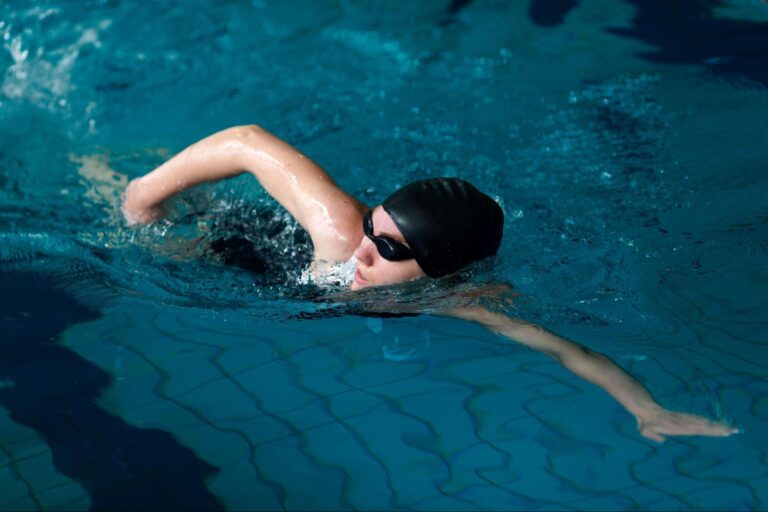
At Marsden, stroke development follows a structured pathway through our Swim Level Progression framework. Children progress through freestyle and backstroke before moving on to breaststroke and butterfly as they gain strength and coordination. Each stroke involves a distinct body position, timing pattern, and breathing technique. Learning all four builds a complete, versatile, and confident swimmer.

3. Turns, Push-Offs, and Underwater Skills

As children advance through kids swimming lessons Singapore programmes, they learn tumble turns, wall push-offs, and underwater streamlining. These skills matter for competitive development but also reinforce spatial awareness and body control in the water. A child who moves fluidly underwater carries that physical intelligence into every aquatic environment they encounter.

4. Treading Water and Distance Swimming

The ability to tread water without support marks a significant turning point. It moves a child from someone who can swim lengths to someone who can genuinely manage themselves in open water. Combined with distance swimming, this milestone represents a transition from learning to swim to being a swimmer in the fullest sense.

How Do Kids Swimming Lessons in Singapore Build Real Water Safety?

Water safety is not a standalone lesson delivered once and forgotten. In quality kids swimming lessons Singapore schools structure properly, it is embedded into every session from the very first class. This is what fundamentally separates a structured, accredited swim school from informal pool time or unstructured recreational swimming.

At Marsden, water safety education runs throughout the entire curriculum. Children are taught pool rules, how to identify hazards, and what to do if they or someone nearby enters difficulty. These lessons are delivered in an age-appropriate way and repeated consistently until they become instinct rather than remembered rules.

1. The HELP Position

Older children learn the Heat Escape Lessening Posture, known as HELP. This is a survival technique used to conserve body heat and energy in open water. Understanding that staying calm and still is sometimes the correct response in an emergency is a critical piece of water intelligence. Responsible programmes include it without exception.

2.  Reaching Rescues and Calling for Help

Children are taught clearly never to enter the water to help a struggling swimmer. Instead, they learn to call for an adult, throw a flotation aid, or extend a towel or rope. These reaching rescue techniques are taught as an explicit part of the water safety skills for kids curriculum at Marsden, building awareness that keeps both the child and others safer.

According to the World Health Organisation, drowning is among the top ten causes of unintentional injury death globally among children aged five to fourteen. Structured swimming education with explicit safety instruction is one of the most effective prevention tools available.

📌The World Health Organisation identifies formal swimming lessons and water safety education as among the most effective drowning prevention strategies for children worldwide. (Source: WHO Global Report on Drowning, 2014)

What Are the Benefits of Swimming Lessons for Kids Beyond the Pool?

This is where parents are often most surprised. The benefits of swimming lessons for kids extend well beyond technique and water safety. They shape a child’s confidence, social skills, physical development, and approach to challenges across every part of their life.

1. Full-Body Fitness and Physical Coordination

Swimming is a full-body activity that simultaneously develops cardiovascular fitness, muscular strength, flexibility, and coordination. Unlike single-discipline sports, it engages the entire body in a low-impact environment that is gentle on developing joints. Children who swim regularly build body awareness and gross motor skills that carry over into every physical activity they participate in.

2. Confidence and Genuine Self-Belief

Progress in kids swimming lessons in Singapore is visible and sequential. When a child floats independently for the first time, completes their first unassisted lap, or masters a stroke they found genuinely difficult, they experience a concrete, earned achievement. This kind of measurable success builds real self-belief rather than empty reassurance.

At Marsden, our small class structure ensures every child receives individual coaching feedback in every session. No child is overlooked. Progress is tracked and celebrated at every stage of our Swim Level Progression curriculum, making development visible and motivating for both child and parent.  Our online customer portal gives parents direct visibility into their child’s progress, so milestones are shared and celebrated together every step of the way.

3. Discipline and the Ability to Work Toward Goals

Swimming teaches children to practise consistently, persist through difficulty, and work toward goals that take time and effort to achieve. A child who learns to manage the frustration of a breaststroke timing drill that takes weeks to click has learnt something far more important than a stroke. That discipline travels directly into academic performance and social settings.

4. Social Skills and Teamwork

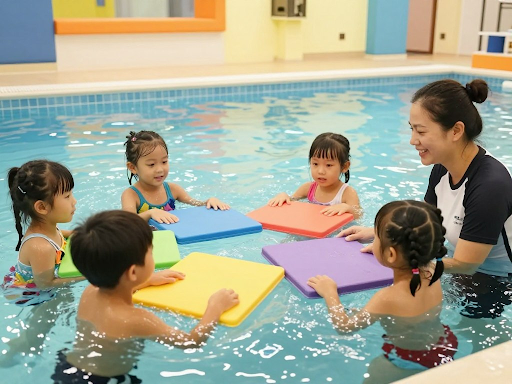
Even in small group lessons, children learn to take turns, encourage each other, follow coaching instructions, and acknowledge each other’s progress. In our Swim Squads programme, children develop genuine team identity and experience what it means to train together toward a shared goal — a social foundation that supports them in school and beyond.

What Age Should Children Start Kids Swimming Lessons in Singapore?

The answer is earlier than most parents expect. Marsden’s programme begins from four months old, introducing babies to the water in a warm, safe environment with a parent or caregiver in the pool throughout. This stage focuses entirely on water familiarisation and comfort, not technique.

The American Academy of Pediatrics updated its guidance to recommend formal swimming lessons from age one for most children, citing significant reduction in drowning risk as the primary basis for that recommendation. That said, readiness varies between individual children, and a quality swim school assesses each child individually rather than placing them by age alone.(Source: HealthyChildren.org, AAP, 2023)

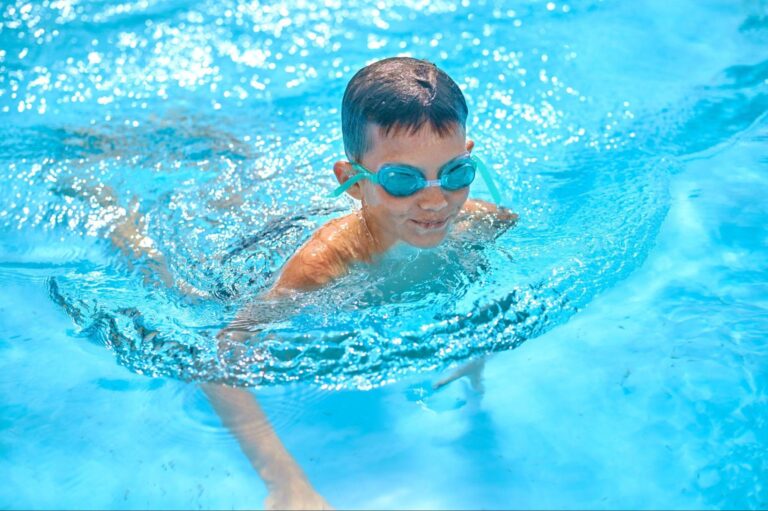
For school-aged children who have not yet started lessons, it is never too late. Kids swimming lessons Singapore programmes at Marsden are designed to take complete beginners from zero water comfort to confident, capable swimming through a patient and personalised approach. Older beginners often progress quickly once the right foundations are in place.

What Happens During a Typical Kids Swimming Lesson at Marsden Singapore?

Parents often want to know exactly what a session looks like before they enrol. Here is a straightforward walkthrough of how kids swimming lessons in Singapore at Marsden are structured.

1. Warm-up and water entry

Children enter the water under coach supervision and begin with gentle movement to warm the body and ease into the session.

2. Skill review

The coach revisits skills from the previous lesson to reinforce retention. Repetition is how motor skills become automatic rather than conscious.

3. New skill introduction

One or two new skills or technique adjustments are introduced clearly, demonstrated by the coach, and practised with individual feedback for each child.

4. Drill work

Children work through targeted drills that isolate specific elements of their strokes or water safety skills, allowing the coach to correct and refine in real time.

5. Full stroke practice

Skills are brought together in full-stroke swimming, applied across increasing distances as the child builds stamina and confidence.

6. Cool-down and debrief

The session closes with an easier movement to bring the heart rate down, followed by brief individual feedback from the coach so children and parents understand what to focus on before the next lesson.

This structure applies consistently across all four Marsden locations — Bukit Timah, Potong Pasir, Delta Sport Centre, and the German European School Singapore.

What Makes Marsden Different From Other Kids Swimming Lessons Singapore Schools?

Not all swim schools deliver the same standard of instruction. The quality of coaching qualifications, class structure, curriculum design, and the pool environment all determine how quickly and how safely your child progresses.

Marsden Swim School is Singapore’s only Gold Standard Tier-1 AUSTSWIM-accredited swim school. AUSTSWIM is recognised internationally as the leading qualification authority for aquatic educators. Every Marsden coach holds internationally certified credentials. Squad coaches are accredited by both the Australian Swimming Coaches and Teachers Association (ASCTA) and Singapore’s National Registry of Coaches (NROC).

Small class sizes are not a marketing phrase at Marsden as  they are a structural commitment to quality that runs through every programme we offer. Fewer swimmers per coach means genuine individual attention in every session, not a general group demonstration followed by unmonitored practice.

All Marsden pools are heated and operated with advanced filtration systems. Lessons are never cancelled due to rain or cold weather. Your child’s routine stays consistent, and consistent attendance is directly linked to faster and more confident skill development in kids swimming lessons in Singapore environments.

Marsden’s online customer portal keeps parents connected throughout the journey — from managing schedules and make-up classes to receiving progress updates from the coaching team, all in one place.

If you want to understand our full progression structure before enrolling, our Swim Level Progression page maps every stage from complete beginner through to competitive squad level.

Frequently Asked Questions About Kids Swimming Lessons Singapore

1. What is the right age to start kids swimming lessons in Singapore?

Kids swimming lessons programme in Singapore at Marsden begin from four months old through the infant and toddler programme, which runs with a parent in the pool and focuses on water familiarisation, comfort, and early aquatic awareness.. For older beginners, there is no upper limit on starting age. Marsden’s Learn to Swim programme takes children from complete beginners to confident, independent swimmers. Every child is assessed individually before progression is planned.

2. How long does it take for a child to become confident in the water through kids swimming lessons in Singapore?

Most children who attend weekly kids swimming lessons in Singapore achieve basic water independence within a few months, though this varies with age, natural comfort level, lesson frequency, and how consistently they attend. Children who begin earlier and attend regularly tend to progress faster and retain skills more reliably. At Marsden, every child follows an individual pathway through our Swim Level Progression framework. Rather than placing all children on the same timeline, we track and celebrate progress at each stage, ensuring confidence builds genuinely rather than being rushed.

3. What water safety skills do children learn in swimming lessons in Singapore?

Water safety skills for kids covered in Marsden’s programme include safe pool entry and exit, front and back floating, treading water, breath control during submersion, hazard recognition, reaching rescue techniques, and the HELP survival position for older children. These skills are not taught as a separate module. They are woven throughout the full curriculum from the very first lesson so that safety awareness becomes automatic rather than consciously recalled. According to the American Academy of Pediatrics, swimming lessons that explicitly include water survival skills reduce drowning risk by up to 88% in young children.

4. Are kids swimming lessons in Singapore worth starting before age four?

Yes. Early exposure to water builds comfort and body awareness that accelerates skill development as children grow. Marsden’s infant programme starting from four months is specifically designed for this developmental stage, with every activity calibrated to the child’s physical and cognitive readiness. Lessons at this stage are not about strokes. They are about building a calm, trusting relationship with the water that makes every subsequent stage of kids swimming lessons in Singapore faster and more enjoyable.

5. How does Marsden track and communicate my child’s swim progress?

Marsden uses an online customer portal that parents can access to track their child’s swimming progress, receive updates from the coaching team, manage class schedules, and handle absences — all in one place.  Coaches monitor individual progress in every session, and parents receive regular feedback on what their child is achieving and what the next development focus will be. The small class structure means coaches can provide detailed, personalised attention and coaching feedback to every student in every lesson, one of the most meaningful differences between Marsden and other group-based kids swimming lessons in Singapore. For more detailed progress conversations, parents are encouraged to speak directly with their child’s coach after class or contact the admin team at admin@marsdenswimschool.com.

Give Your Child the Best Start in the Water

Kids swimming lessons in Singapore provide one of the most meaningful foundations a parent can build for their child. The water safety, physical skill, emotional confidence, and personal discipline that come from quality swim education stay with a child for life. They are not just learning to swim. They are learning to be capable, safe, and genuinely confident in one of the most essential environments in Singapore.

Marsden Swim School has been building exactly these outcomes for over 25 years. As Singapore’s only Gold Standard AUSTSWIM-accredited swim school, with internationally certified coaches, heated indoor pools, and small class sizes, every child receives the individual attention they need to thrive at their own pace.  Our online customer portal keeps you connected to your child’s progress every step of the way.

Explore our swimming class for kids, view our programme rates, or register for a trial lesson today. Your child’s confidence in the water starts with a single session.

Marsden Swim School is located at Bukit Timah, Potong Pasir, Delta Sport Centre, and the German European School Singapore. All pools are heated, indoor, and run year-round.

📧 Emailadmin@marsdenswimschool.com

📱Phone 6015 0637

📍 Main Address102 Jalan Jurong Kechil, Singapore 598602

🕐 Operating HoursMonday to Sunday, 10am – 6pm

🌐 Website https://marsdenswimschool.com

📘 Facebookfacebook.com/marsdenswimschoolsg

📸 Instagram@marsdenswimschool